Why Study Solar Eclipses?

What the 2024 Eclipse Could Teach Us
Eclipses are not only incredible to watch (using safe viewing techniques, of course!), but they have also played important roles in helping us to understand the cosmos. It was an eclipse that revealed the Sun’s radiant crown, called the corona, which is usually too dim to be seen against the Sun’s blinding brightness. An eclipse led to the discovery of a new chemical element inside the Sun, named helium after the Greek sun god Helios. An eclipse even provided some of the first evidence for some wacky-sounding ideas about time and space called the theory of general relativity, dreamt up by Albert Einstein.
Though humans have been carefully monitoring eclipses for millenia, we continue to learn new things from them. Here are some of the scientific projects that will take place during the April 8, 2024 eclipse. Planned for years, these experiments will have just a few minutes of darkness to collect their data, as they try to answer these big questions about our solar system:

Why does the Sun have spots?
Like a leopard, the Sun has spots: dark blotches cooler than the rest of the star’s surface that appear and disappear from time to time. Though Galileo first observed these sunspots more than 400 years ago, no one today knows when and where they will form. That’s a problem because sunspots are related to giant flares from the Sun that catch us unawares, damaging satellites and other equipment. This phenomenon is called space weather.
“Space weather is difficult to predict, much tougher than everyday weather here,” said astronomer Thangasamy Velusamy. He said that if we want to understand sunspots, we first need to understand the Sun’s magnetic fields, which form sunspots. Spacecraft have measured these fields far (millions of miles) from the Sun, but no one knows what’s going on closer in (tens of thousands of miles) where sunspots form, and it’s too hot to send a probe there.
That’s why Velusamy’s team will monitor radio waves created by the magnetic fields, using an antenna once employed to communicate with deep-space probes. Because radio waves are stretched out compared to visible light, they usually don’t reveal a lot of detail about the Sun. But the eclipse will clarify the signal. By measuring how much radio transmissions from the Sun drop when blocked by the Moon, scientists should be able to calculate the strength of the magnetic fields responsible for those radio waves.
How big is the Sun?
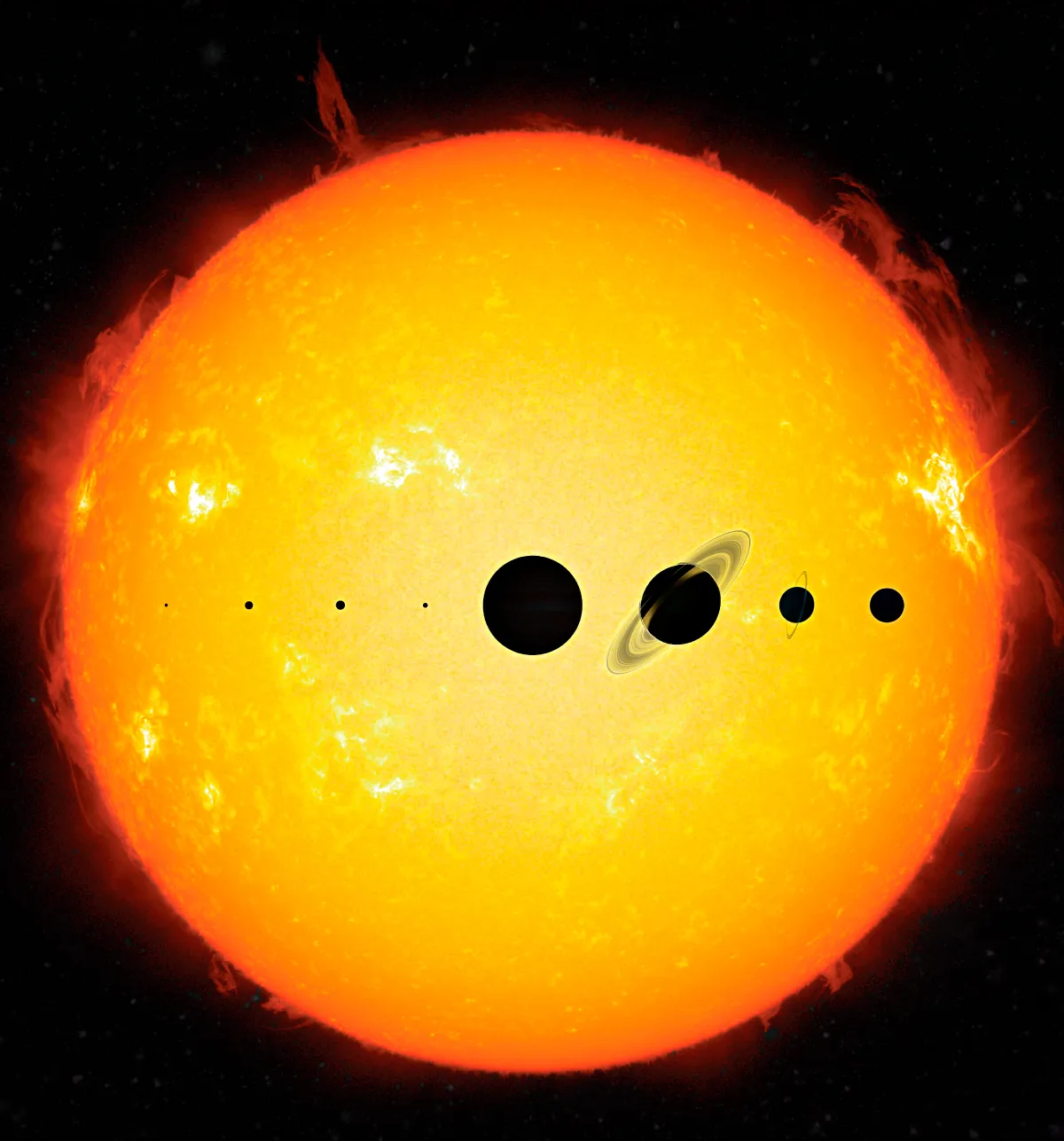
When famed ancient philosopher Anaxagoras calculated the size of the Sun, he got it very wrong. He thought it to be a bit bigger than a Greek island, perhaps a few hundred miles across.
Today, our estimates are much better, but the case isn’t closed. Astronomers trying to calculate when and where an eclipse will be visible at different places on Earth say the diameter of the Sun, roughly 930 million miles, is the most uncertain part of their math. One group of scientists has been arguing that the usual estimate is a few hundred miles off.
They’re hoping to prove their point during this year’s eclipse, thanks to precise measurements of the Moon that have been made in recent decades. Lasers bounced off the Moon have gauged its distance from Earth to within a meter. Satellite observations have charted the heights of the Moon’s mountains to within 10 meters. By feeding these observations into computer models, the Sun sizers can predict where light should peak through mountains and valleys at the edge of the Moon, as it passes in front of the edge of the Sun. By comparing these predictions to actual telescope observations of the eclipse, they hope to pin down the size of the Sun with unheard-of precision.
“Science is like the Olympics,” said Dan McGlaun, an amateur astronomer working with the group. “Just as a lot of people who won gold medals years ago wouldn’t even qualify today, our technological advancements let us make measurements that were once impossible.”
What shape is the Sun?
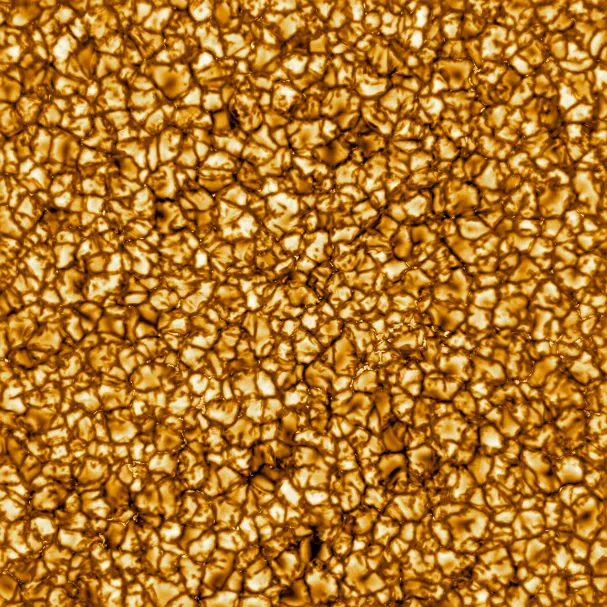
It might shock you to know that the Sun isn’t a perfect sphere. Not only does it bulge in the middle as it rotates, but its surface also has ripples—like waves on an ocean—created by currents and flows of dense gasses deep inside the star.
Knowing the precise shape of the Sun could be useful for testing unusual theories of gravity, so NASA spent more than a decade monitoring it using a telescope on a satellite. A new project called SunSketcher hopes to improve on this work using normal smartphones, like the one you might have in your pocket.
“It may sound strange, but we think we can do better with phones,” said physicist Gordon Emslie. “NASA had only one satellite, and we’re hoping to recruit millions of cellphones.” SunSketcher is asking volunteers to point their phones at April’s eclipse and snap a few photos. These images will be fed into an app, tested during last year’s partial eclipse, that will look for blobs of lights. Called Baily’s beads, these blobs appear as the edge of the moon passes in front of the edge of the Sun. Smartphones are just good enough to spot these beads, so by comparing which phones see them at different locations along the eclipse’s path, the project hopes to measure the shape of the Sun down to a precision of meters.
If you’d like to take and share your own pictures, visit https://sunsketcher.org/. Don’t worry if you won’t be in the center of the eclipse’s path; the project especially needs participants shooting at many different angles.

Why is the Sun’s corona so hot?
If you draw the Sun with points sticking out in every direction, you’re on the right track. The Sun sports a radiant crown, called the corona; its prongs contain gases a thousand times hotter than the surface of the Sun.
Why the corona should be so much hotter than the Sun itself is a mystery. Solving it has proven difficult because the corona is usually hard to see and thus hard to study. Astronomers have come up with clever tricks for observing the corona: using discs placed in front of telescopes, for instance, to block most of the light coming from the Sun.
But such discs have their limitations. For telescopes on Earth, they tend to make the sky look overwhelmingly bright. For telescopes in space, they struggle to shield against stray light bending around their edges.
The best time to study the corona, as any astronomer knows, is during an eclipse. “The eclipse provides a unique opportunity to image the corona, starting at the Sun and extending all the way out into space,” said solar researcher Shadia Habbal. “There’s nothing else at the moment that allows you to do that.”
She has spent decades examining different chemical elements within the corona during eclipses, with instruments on the ground and flown on kites. This year, she’s using a dish antenna on a NASA airplane to look for iron in the corona that gives off a greenish hue; this metal should help her to better map the corona’s temperature fluctuations.
How does the sky change at night?
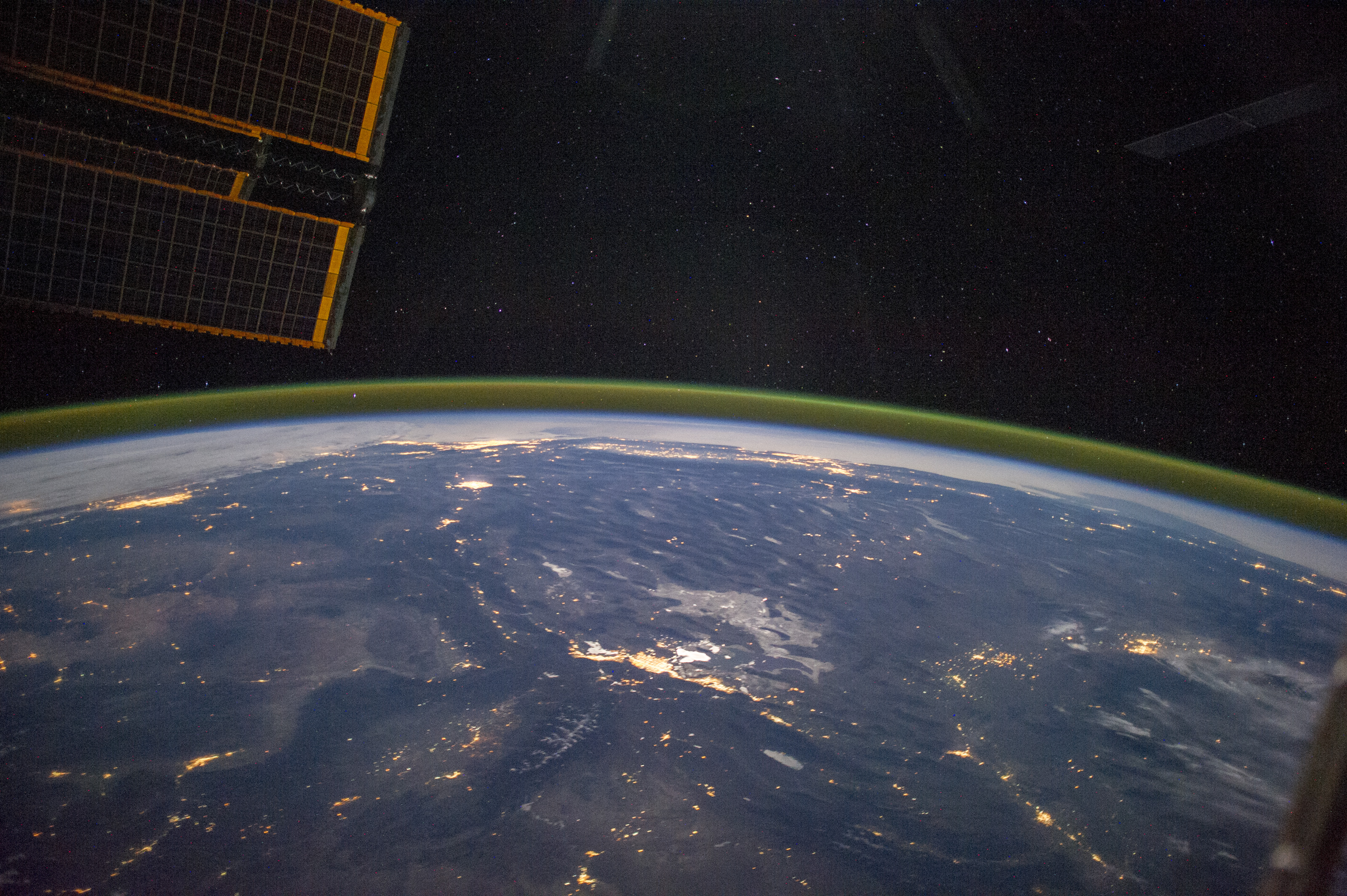
Everyone knows that the sky is different at night than during the day. It’s darker, obviously, and colder. But an upcoming project hopes to spot a subtler change. During this shift, which takes place every sunset, the negatively charged upper reaches of the atmosphere become more positively charged in the dark.
Scientists have created computer models of the chemical reactions behind the transition, which can disrupt GPS and radar technologies here on the ground. But testing those models has proven difficult, in part because the changes occur gradually. “The eclipse will let us see what happens when things change quickly from day to night,” said space scientist Bharat Kunduri. “It’s the perfect experiment to study this, provided by nature.”
To measure the atmosphere during the eclipse, his team has mounted equipment on a NASA aircraft that will chase after the eclipse to collect as much data as possible. Here on the ground, the Sun will disappear for only about four minutes. But for the eclipse-chasing plane, things will stay dark for up to seven or eight minutes. The scientists will compare their data to computer models and to observations collected by radar dishes that lie along the eclipse’s shadow on the ground.