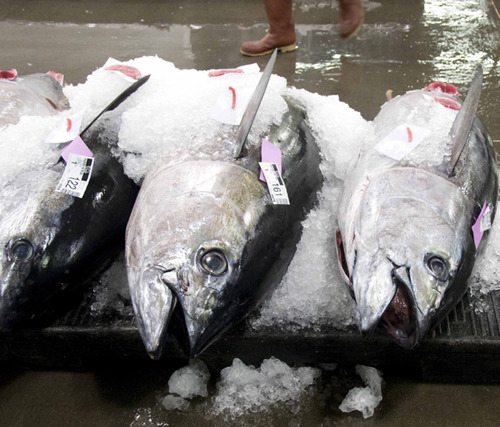
If we shut down all fishing in international waters, would fish harvests actually increase? It seems counterintuitive, but it’s the most likely outcome, according to research presented by one economist at the AAAS Annual Meeting in San Jose on Friday.
We’ve all heard about declining numbers of ocean fish in recent decades. And as it gets harder to catch fish along the coasts, fishermen are increasingly trolling international waters—areas more than 200 nautical miles away from any coastline.
The study looked at what would happen if nations agreed to ban all fishing in international waters. It would obviously help tuna and other fish species that go back and forth between coastal and international waters. But what about the fishermen? Would their catches and incomes decline? Would some countries lose more than others?
In fact, global catches of these fish would probably increase, said U. Rashid Sumaila, an economist from the University of British Columbia. He and other researchers modeled the scenario, and they estimate that fishermen worldwide would probably catch 42% more fish in coastal areas, more than enough to offset the loss of the banned fishing grounds. Even a modest catch increase of 18% would mean no net loss in fish catches, Sumaila said.
“We should turn international waters into a fish bank for the world,” Sumalia said. This protection would give open ocean fish a chance to reproduce and mature, which is especially critical for slow-growing species like tuna.
Although the study paints a rosy picture, a high seas fishing ban is a radical idea, and not likely to be enacted any time soon. In the last decade alone, several more modest plans to restrict international fishing were vetoed by one nation or another.
Such a ban would benefit fishermen from most nations, Sumaila said, including the U.S. and powerful EU nations. But a few, such as South Korea, Taiwan, and Spain would see their catches decline. That might probably be enough to sink the plan, regardless of its benefits.