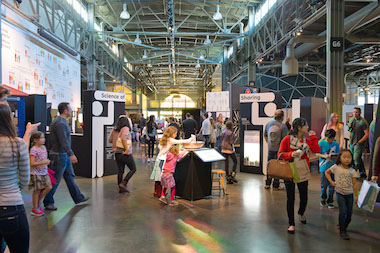
Psychologist and writer Hugh McDonald fills us in on the newest exhibition Science of Sharing and “why do we do what we do.” McDonald is the Principal Investigator for the National Science Foundation-funded initiative to develop exhibits that let visitors experiment with resource-sharing and collaborative problem-solving. His and other’s findings are the subject of the Science of Sharing Forum on Saturday, June 6, 2015.
Where did the idea for Science of Sharing come from?
I’m a social psychologist, and before coming to the Exploratorium in 2001, I was a psychology professor. I came to the museum as a Senior Science Writer, but always in the back of my mind was the idea that we could experiment with exhibits specifically about social behavior. We’re a museum of direct experience with phenomena, and social interactions, and the way we think about social interactions, are phenomena as well, just as open to inquiry and experimentation as light, sound, color, motion, and all the other things that science museums make exhibits about. So while I was writing exhibit labels and articles and text for our website on all sorts of topics, I was also thinking about how to get such a project going. After several years of talking with other staff about how to build such a project, we submitted the Science of Sharing grant proposal to National Science Foundation in 2010, and they funded it.
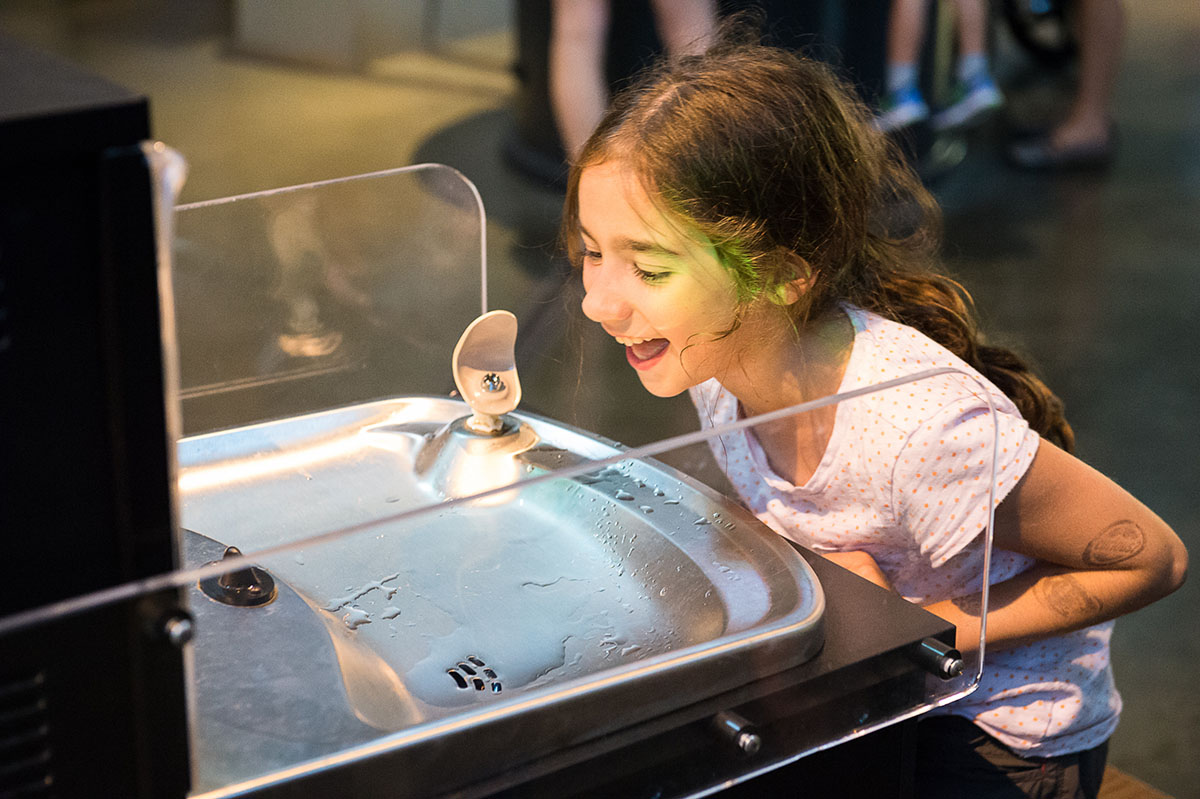
A guest places her faith in her friend's hands, happily risking a damp face to better understand fundamental social theories like the Prisoner’s Dilemma. Gayle Laird/Exploratorium
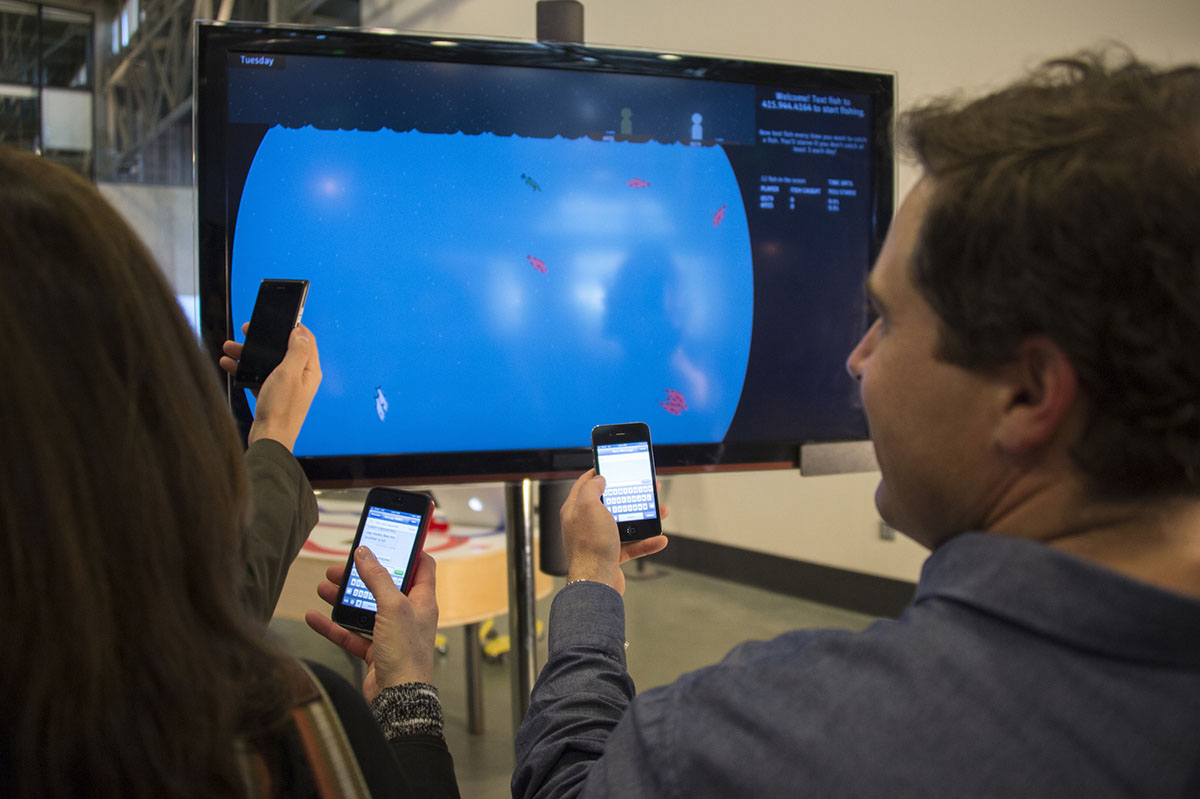
Friends and strangers collaborate to preserve or deplete our digital resources at the Text Fish exhibit. Gayle Laird/Exploratorium
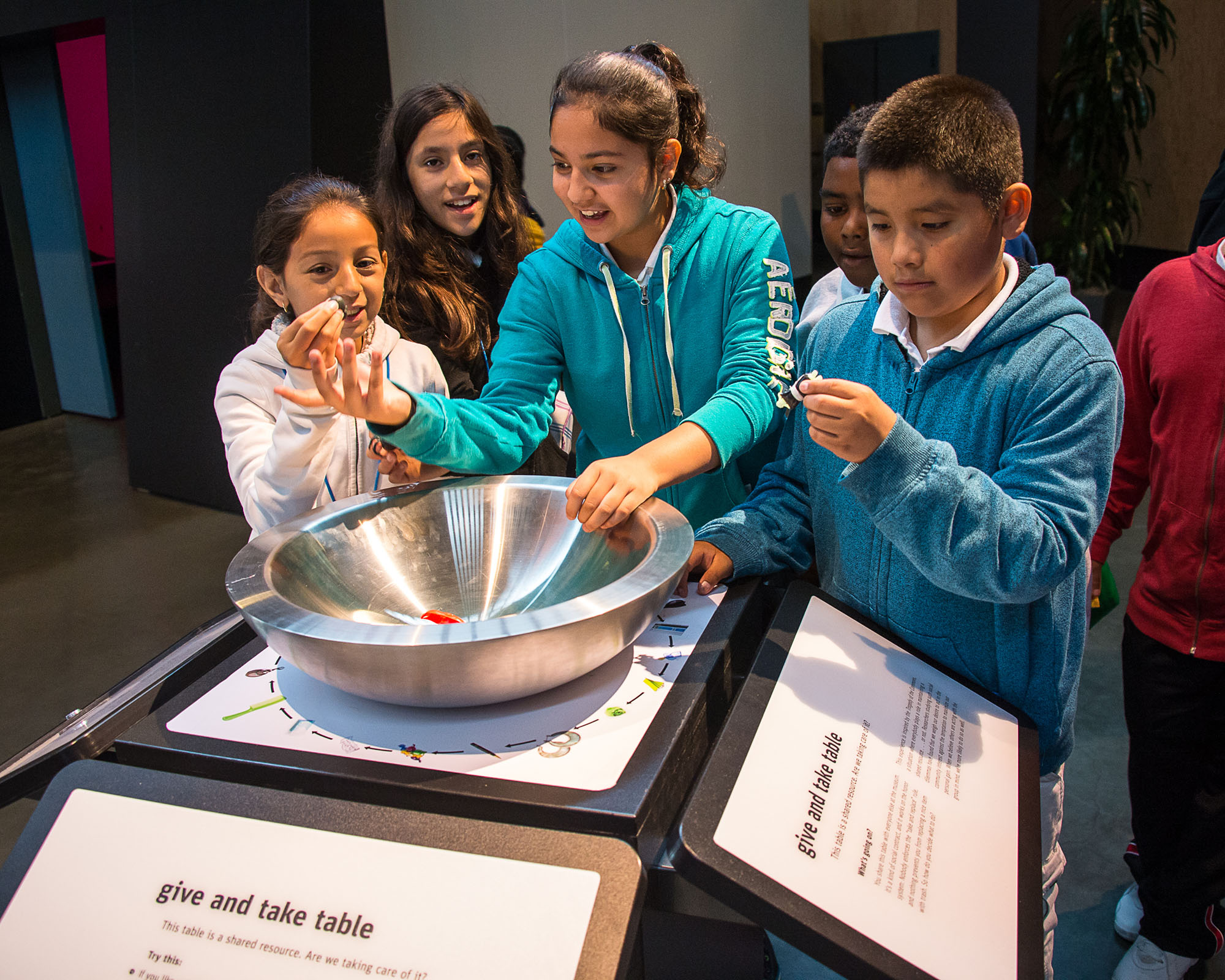
At the Give and Take Table exhibit, young guests decide to leave objects for others or take anonymous gifts. Gayle Laird/Exploratorium
This may be like asking which of your kids you like best, but what is your favorite exhibit?
In terms of the visitor experience, I’d say Trust Fountain, which turns a complex concept like the Prisoner’s Dilemma into something really fun, both to do and to watch. In terms of content, TextFish, because to me, the Tragedy of the Commons is at the heart of the “so what?” question about Science of Sharing. Why should people care? Because the way we negotiate (or fail to) about sharing common resources—like clean air, fresh water, fish in the ocean—underlies massive real problems we face as a civilization. And in terms of a really innovative exhibit, I’d say Give and Take Table, because without any moving parts, it gives visitors a chance to interact with each other in an unexpectedly meaningful way.
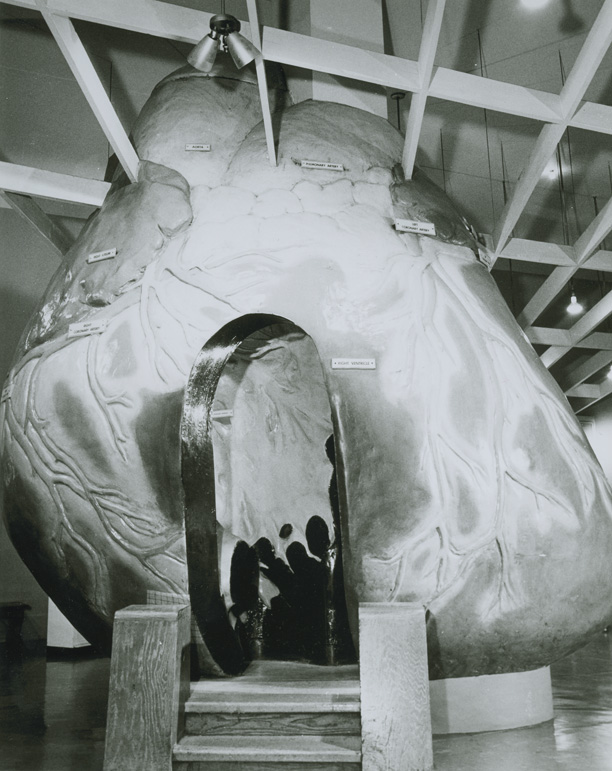
© Museum of Science and Industry, Chicago
Can you remember your first museum visit and does it shape you as an exhibit and exhibition maker today?
First museum visit was probably to the Museum of Science and Industry in Chicago, which is often thought of as one of the first science museums that moved away from collections based on specimens in glass cases and pioneered hands-on interactions. It absolutely set the stage for the work I ended up doing at the Exploratorium. I still remember their giant walk-through heart with its deep beating sound; even at a young age, it made a big impression on me as a really different way to learn about what a heart was and what it did.
Where can we see your hand present in Science of Sharing? Or maybe better said, can we see those early experiences present in Science of Sharing?
My role was first to conceptualize the overall project, after that to seed the team with concepts and ideas from research, and then to oversee the prototyping and development process to keep the content and experiences consistent with the project’s overall themes and goals. We wanted something that would engage experimentation with cooperation, collaboration, and sharing; promote social interactions and conversations between visitors about how they acted and thought and felt, and raise awareness of the scientific study of human behavior.
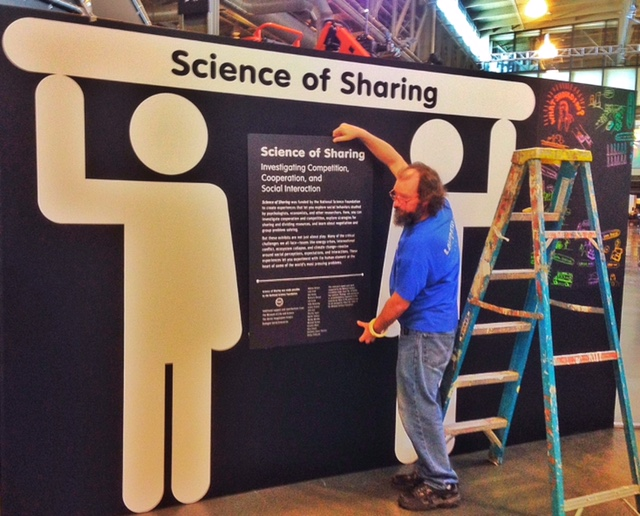
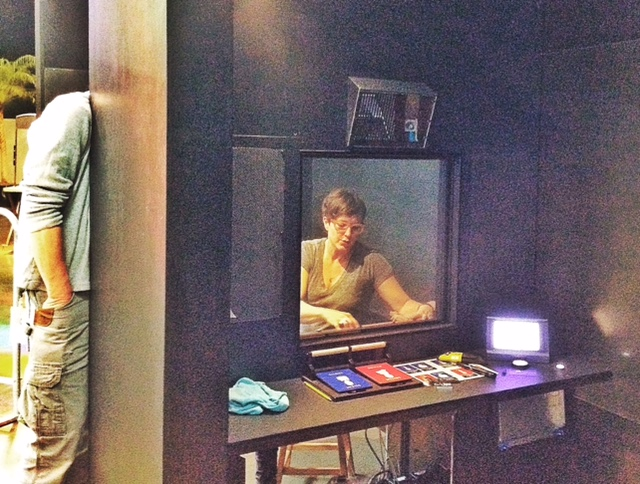
Science of Sharing team members hard at work during West Gallery installation. Hugh McDonald/Exploratorium
What role did your team play?
The actual creative work of taking those big ideas and turning them into compelling experiences—coming up with exhibit ideas, mocking them up, testing them with visitors, continually shaping them based on what we saw and heard, creating the final form and structure of the exhibits—was done by our amazing team of exhibit developers, technicians, and evaluators. They have the expertise and skills to apply everything we’ve learned from years of developing engaging learning experiences in other areas to the new challenges required to make strong exhibits about social behavior.
What impacts do you hope Science of Sharing will have on visitors?
Science of Sharing is first and foremost designed to raise people’s awareness of how they act, think, and feel in social situations involving cooperation, competition, and sharing—not so much to promote cooperation, but to make people think about how they do or don’t cooperate, and perhaps why they do what they do. So much of our social behavior is essentially automatic: we don’t often ponder or reflect on many of our actions, and don’t often question our perceptions or interpretations of social behavior, either our own or that of others—we often just act. Science of Sharing is really designed to create social experiences that slow people down just enough to let them consciously reflect on how they perceive a social interaction, how they view and make judgments about others, and how they choose one behavior or response from a whole set of possible responses. If someone leaves having spent a bit more time then they had before thinking about their own perceptions and deliberations and actions, Science of Sharing has accomplished something.
The Science of Sharing Forum is happening on June 6. What is it and how does it extend the exhibition?
The Forum offers us another chance to share the big ideas behind the exhibition with the public, this time through invited presentations by researchers and others whose work is deeply connected with the project’s core themes, and through a few playful and thought-provoking activities that can give visitors new insights into the exhibits and how they were created.