Static Tube


We joined forces with Community Science Workshops to design this DIY Exhibit that you can make from everyday objects for your community space. This activity is based on the Exploratorium exhibit Giant Electroscope.

A clear plastic container. We used a plexiglass tube a few inches wide.
Other things to try: a soda bottle, a tennis ball tube, Tupperware®
Something soft. Or hairy. We used fake fur.
Other things to try: hair, nylon, wool
Little bits. Lots of them. We used beanbag beads.
Other things to try: sawdust, salt and pepper, confetti
We also used cardboard, tape, scissors, and a hot glue gun.
Close one end of the plastic container.

We drew a circle on our cardboard the same size as our plexiglass tube.

We cut out the circle.

We hot glued it to one end of our tube.
Add something soft to rub on the plastic container.

We cut out a piece of fake fur.

We taped it to a cardboard ring just big enough to slide up and down the tube.
Fill the plastic container with lots of little bits.

We poured in our beanbag beads.
We rubbed the fur on the tube to check that the beads stuck to the plastic.
Close the plastic container.
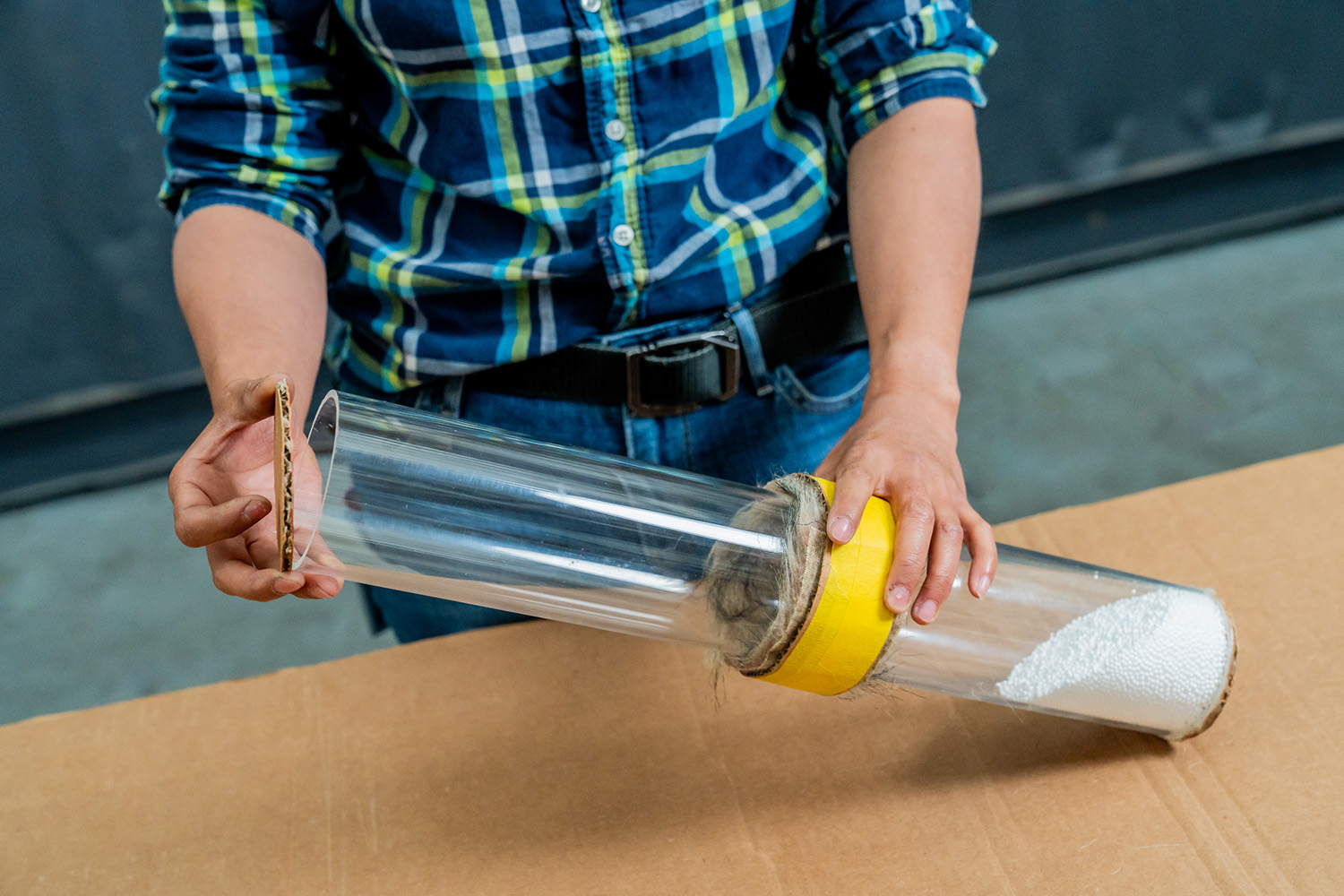
We hot glued another cardboard circle to the other end of our tube.
What do you notice?
What do you wonder?
What do you want to try?
Rubbing the fur causes the plastic to become negatively charged. Scientists have known about this triboelectricity (aka static electricity) for thousands of years. But they still haven’t figured out exactly how it works. Does the plastic become negative because it gains negative charges from the fur or because it loses positive charges to the fur?
Thanks to the plastic’s charge, a bead can become a little more negative on one side and a little more positive on the other side. The positive side of the bead sticks to the negatively charged plastic because opposites attract.
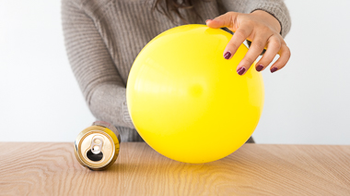
Other combinations of materials can also do this. A balloon rubbed on skin, for example, can pick up pieces of paper. So can a comb run through hair.
- If the little bits don’t stick well, try a smaller or a thinner plastic container.
- You can also use more of the soft thing, try a different soft thing, or experiment with other little bits.
This activity is based on the Exploratorium exhibit Giant Electroscope where two loops of thread are forced apart by static electricity.