New works invite visitors to experience art as a process of experimentation, investigation, and discovery
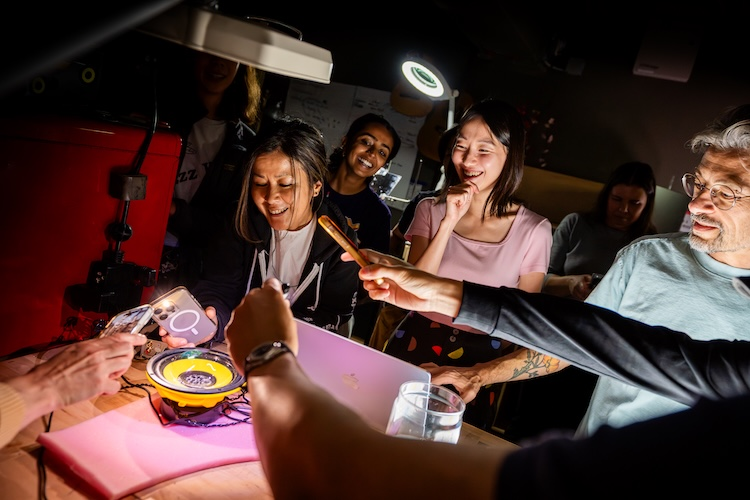
SAN FRANCISCO (October 20, 2026)—This fall, the Exploratorium is expanding its longstanding commitment to the arts with new commissions, installations, and collaborations that invite visitors to experience art not simply as something to observe, but as a way of investigating the world.
Since its founding, the Exploratorium has viewed art as a fundamental method of discovery. Much like the scientific process, the artistic process is rooted in curiosity, experimentation, and close observation. Over the past five decades, the museum has presented the work of hundreds of artists exploring the intersections of art, science, technology, and human perception.
“Art has always been integral to how we explore the world,” said Ann Meisinger, Program Director, Artist-in-Residence Program at the Exploratorium. “We’re proud to be part of the Bay Area’s vibrant arts community and to create opportunities for artists to experiment alongside our staff and visitors. The work that emerges can be surprising, playful, hands-on, and deeply participatory, inviting people not just to look at art, but to explore it, question it, and become part of the experience.”
Surface Space Welcomes Bay Area Artist Shao-Feng Hsu
Opens October 22, 2026, and on view through May 30, 2027
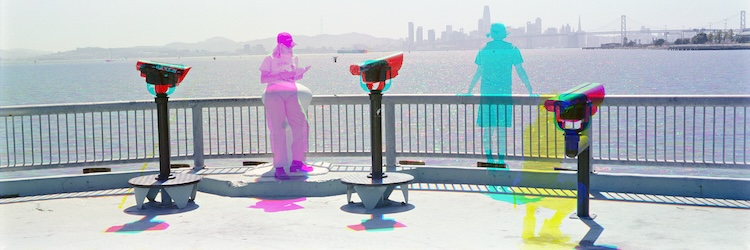
Looking Across the Bay, by Bay Area artist Shao-Feng Hsu, is the newest commission for Surface Space, the Exploratorium’s annually rotating series that invites artists to respond to the ideas and exhibits in its galleries through large-scale visual works. Hsu’s monumental photographic installation will transform a wall in Gallery 3 into a horizontal, cinematic window to the Bay Area. Created using trichrome photography—an early color process that combines three black-and-white exposures made through red, green, and blue filters—the work reveals unexpected colors and patterns wherever people, objects, or shadows shifted between exposures. From a distance, visitors will encounter a single immersive image; up close, its separated color layers, enlarged film grain, and photographic structure come into view. Visitors can also experiment with red, green, and blue viewing filters, bringing different exposures forward as elements of the image appear and disappear.
A New Large-Scale Artwork Reveals a Hidden World of Color
Opens November 19, 2026, and will remain on view through 2031
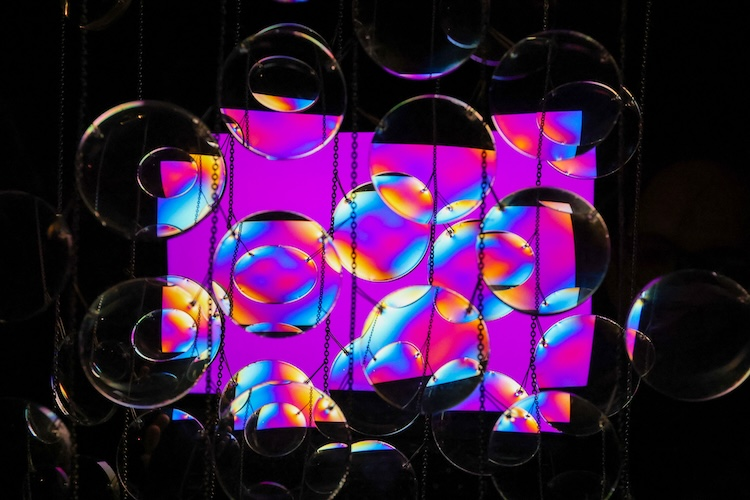
Debuting as part of Glow on November 19, Hidden Beacon is a new commission by Canadian artists Caitlind r.c. Brown and Wayne Garrett, built from thousands of prescription eyeglass lenses acquired from the Canadian Lions Eyeglass Recycling Centre. At first glance, the large-scale installation appears as a luminous beam of white light, evoking a maritime beacon, lighthouse, or falling water. Viewed through polarized glasses, however, the work transforms as vivid colors emerge through the optical phenomenon of birefringence. Commissioned for Gallery 3, Hidden Beacon plays with the limits of human perception and the hidden realities that surround us, revealing an entirely different experience when visitors are given a new way to look.
Further Triennial: Three Artists-in-Residence Present Art Lab
Opens March 11, 2027 and on view through April 25, 2027; Triennial Spotlight Day with special programming on April 17, 2027
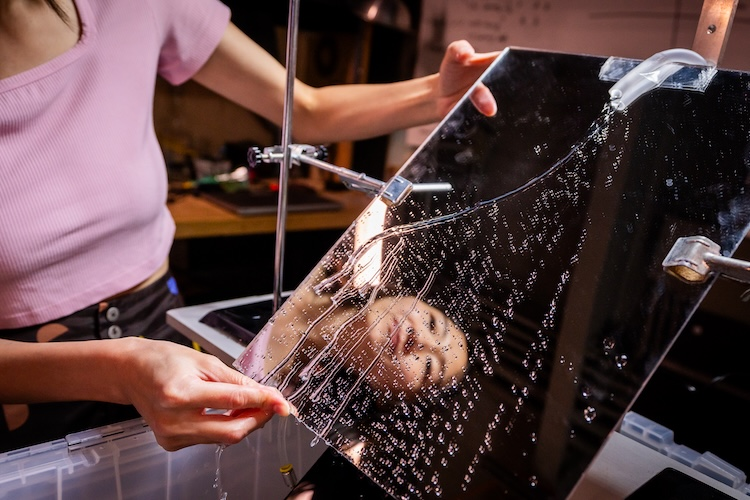
As part of Further Triennial, the first-ever visual arts triennial spanning Northern California, the Exploratorium will present Art Lab, an exhibition featuring new works by three Bay Area Artists-in-Residence, Megan Broughton, Jiabao Li, and Anja Ulfeldt. The exhibition explores the science and aesthetics of water—from secrets trapped in ancient ice and the dynamics of flowing water to the emotional undercurrents of fog. Over the past year, each artist has used the Exploratorium as both studio and collaborator, working with scientists and engineers and testing ideas and prototypes with visitors on the museum floor. Art Lab will bring their new works together alongside facilitated activities, Exploratorium exhibits, and a special film program, continuing an Artist-in-Residence tradition established by Exploratorium founder Frank Oppenheimer in 1974.
Together, these projects reflect an approach to art that has been central to the Exploratorium for more than 50 years: artists working through experimentation, iteration, and inquiry, often alongside scientists, engineers, educators, and visitors. For more information about arts at the Exploratorium, visit exploratorium.edu/arts.