
Since we are going to be in Sarnath for almost two weeks, here are a few tidbits about this town.
Sarnath is located about 12 km (7.5 miles) from the Hindu holy city of Varanasi. Sarnath itself is sacred to Buddhists because it is the site where Gautama Buddha first taught the Dharma after his enlightenment. Sarnath is one of four holy Buddhist sites sanctioned by the Buddha himself for pilgrimage.
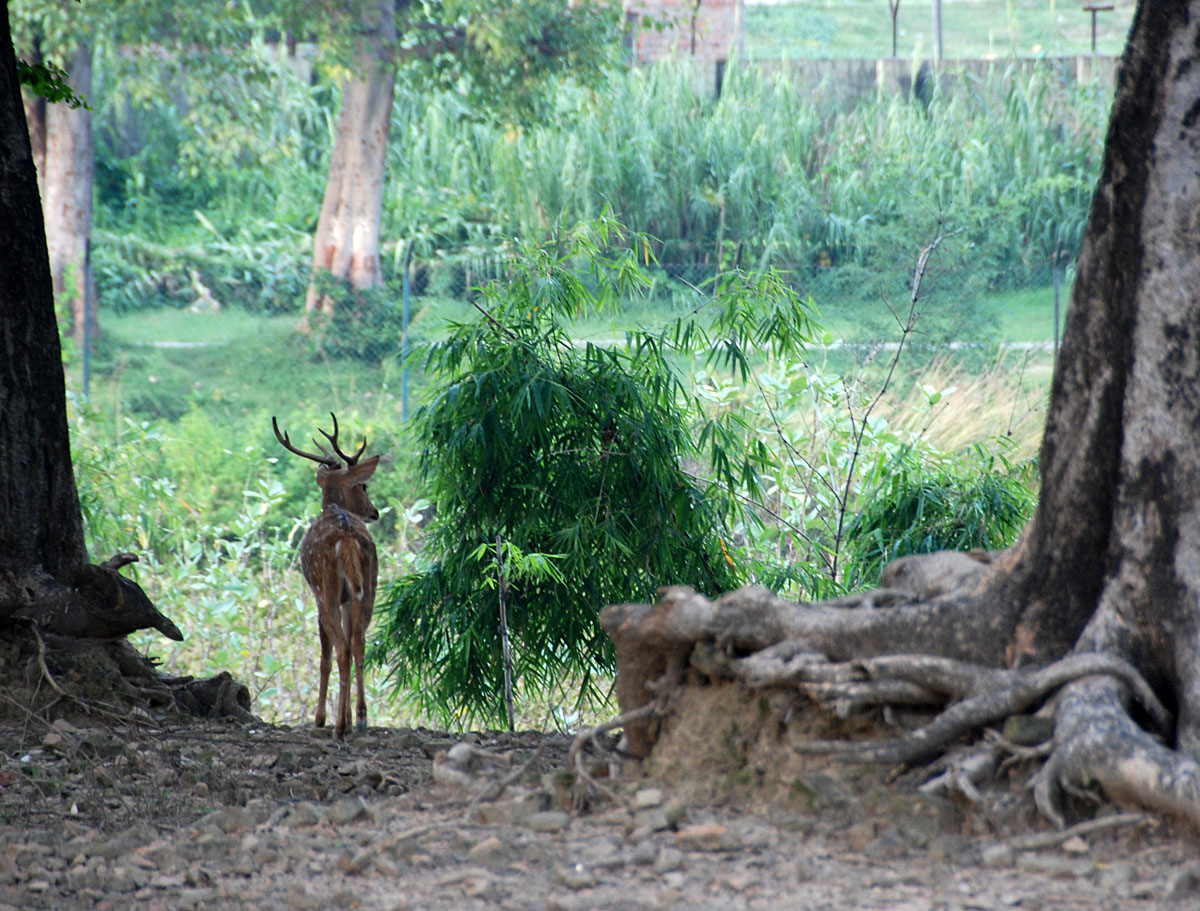
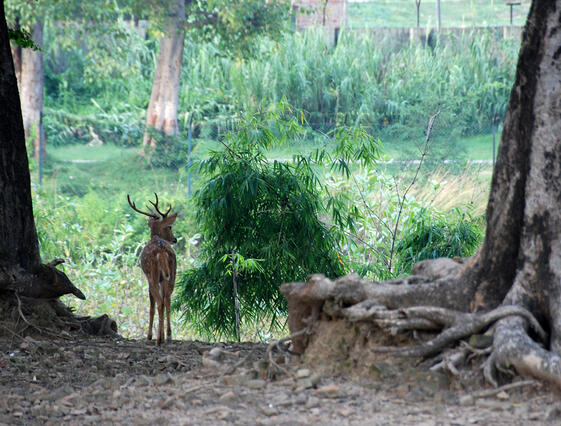
The name Sarnath, from Saranganath, means "Lord of the Deer" and relates to an old Buddhist story in which the Bodhisattva, in a previous incarnation, is a deer and offers his life to a king instead of the doe the latter is planning to kill. The king is so moved that he creates the park as a sanctuary for deer. The park is still there today.

Before Gautama (the Buddha-to-be) attained enlightenment, he gave up his austere penances and his friends, the Pañcavaggiya monks, left him and went to Sarnath.
About 5 weeks after attaining Enlightenment the Buddha, leaving Uruvela, traveled to Sarnath to join and teach them. He went to them because, using his spiritual powers, he had seen that his five former companions would be able to understand Dharma quickly.
While traveling to Sarnath, Gautama Buddha had to cross the Ganges. Having no money with which to pay the ferryman, he crossed the Ganges through the air. When King Bimbisāra heard of this, he abolished the toll for ascetics.
When Gautama Buddha found his five former companions, he taught them, they understood and as a result, they also became enlightened. At that time the Sangha, the community of the enlightened ones, was founded.
The sermon Buddha gave to the five monks was his first sermon, called the Dhammacakkappavattana Sutta. It was given on the full-moon day of Asalha. This event is known as "turning the wheel of the Dharma".

We will be staying and working in the Central Institute of Higher Tibetan Studies, whose objectives have been carefully thought out by eminent scholars in the Indian Government under the guidance of His Holiness Dalai Lama. The objectives are:
- To preserve the Tibetan culture and tradition
- To restore ancient Indian sciences and literature preserved in the Tibetan Language, but lost in the original
- To offer an alternative educational facility to students of Indian border areas who formerly availed the opportunity of receiving higher education in Tibet.
- To accomplish gains of teaching and scope of research in traditional subjects in a framework of the modern university system of education with the provision for an award of degrees in Tibetan studies.
So, we will be bringing our very Western approach to a deeply established, old, and revered tradition. Just one of the many challenges that will make this adventure so rewarding!