
As part of the Tinkering Studios work with the LEGO Playful Learning Museum Network, we have been partnering with the San Francisco Public Library.
One of my favourite public events in San Francisco is Night of Ideas. What started as a festival celebrating knowledge, art, performance, and culture in France has spread across the world. Night of Ideas is co-hosted by the San Francisco Public Library, the Asian Art Museum, KQED, and Villa Albertine, a French cultural institution.
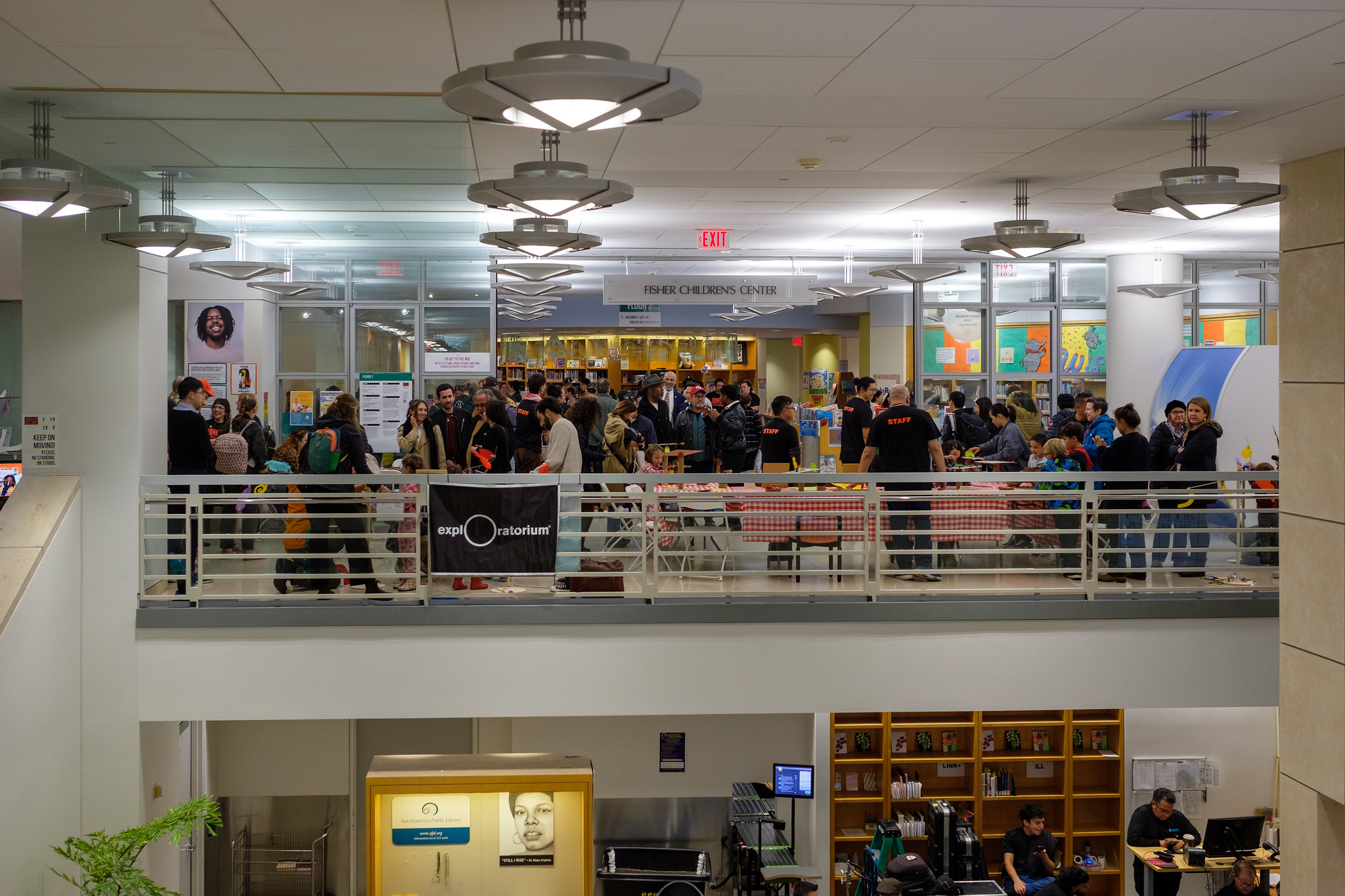
As part of our work with the LEGO Playful Learning Museum Network, the Tinkering Studio has been working closely with the San Francisco Public Library (SFPL). Through this partnership we were fortunate to be able to bring some tinkering experiences to the family oriented Afternoon of Ideas.
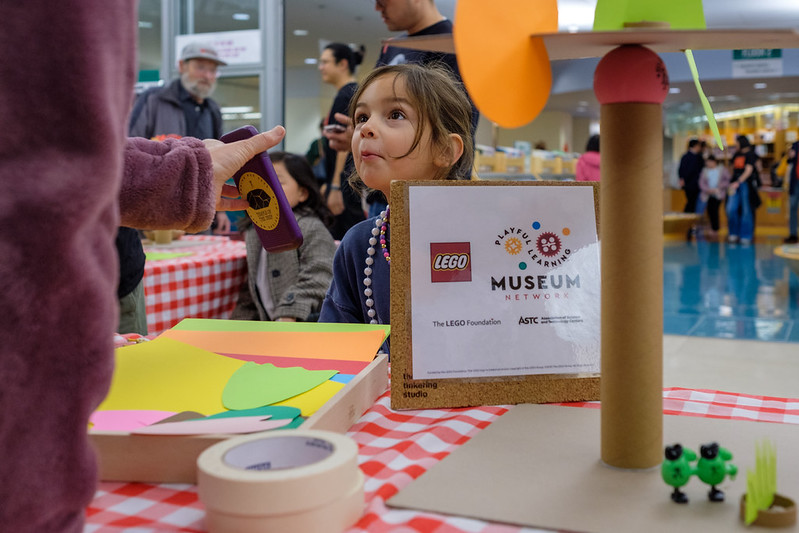
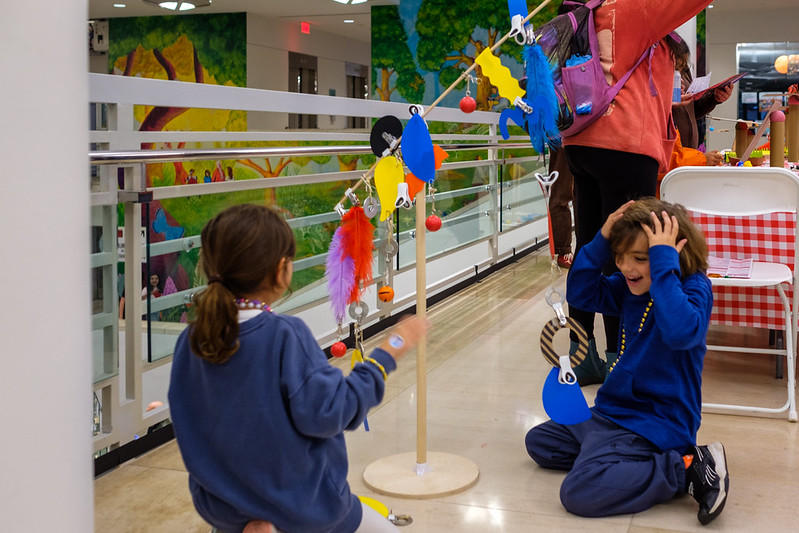
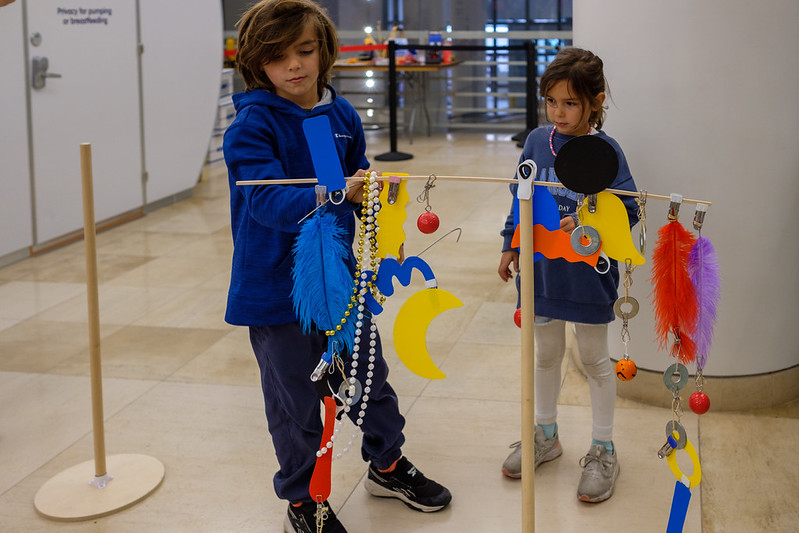
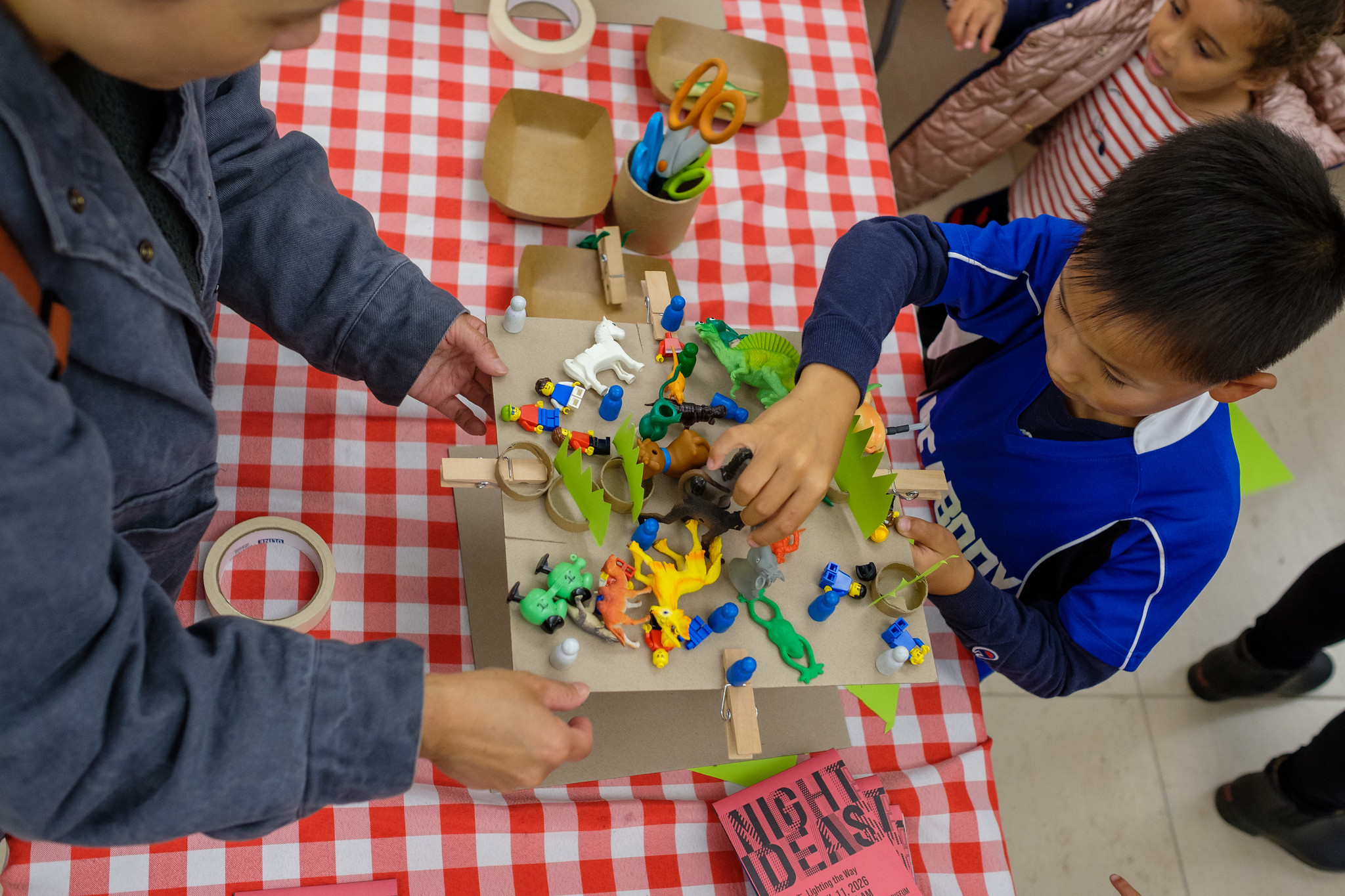
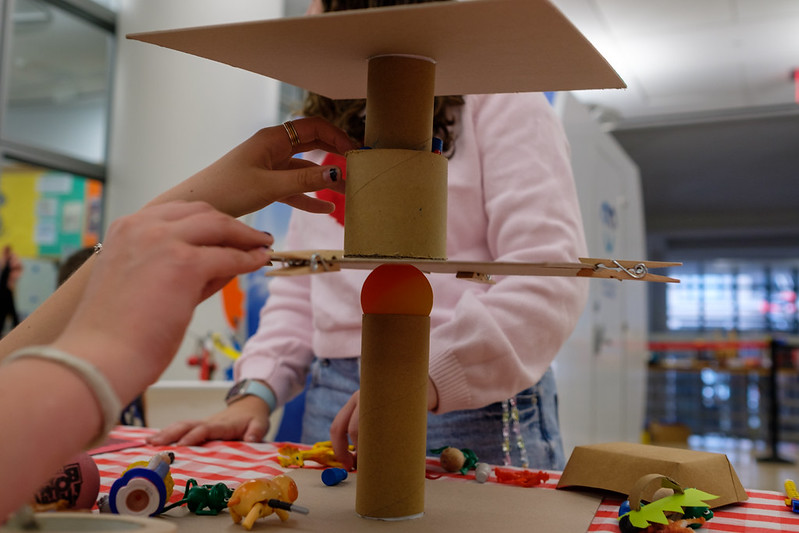
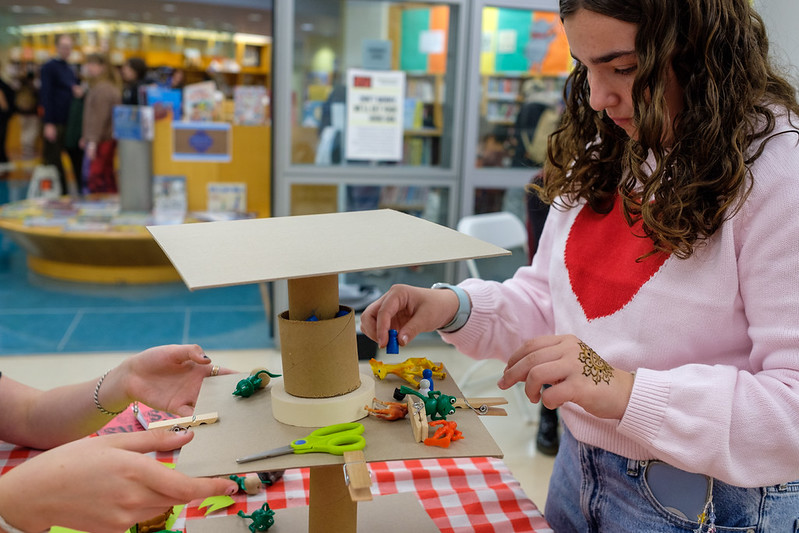
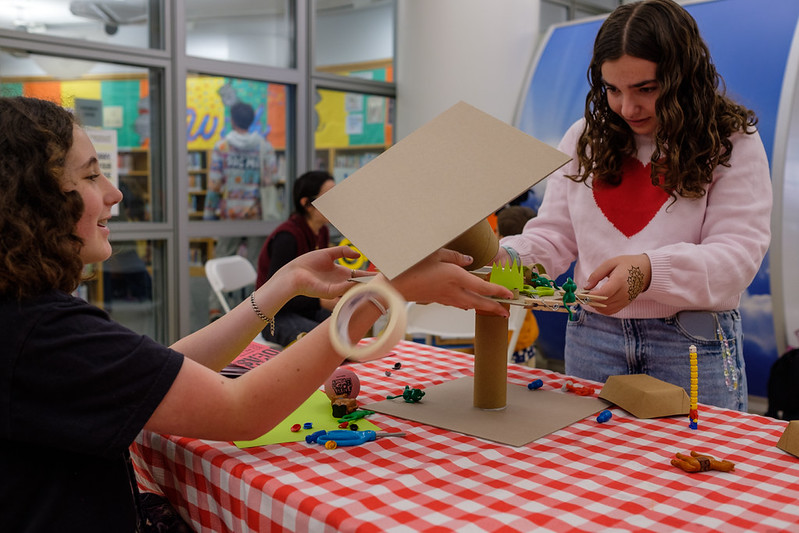
In partnership with the Youth Service Librarians of SFPL, the Tinkering Studio brought two balancing experiences to Afternoon of Ideas. Balancing Sculptures is a tinkering experience that draws inspiration from the sculptures of Alexander Calder. Participants are invited to create their own balancing sculptures using colorful shapes, whimsical weights, and their own curiosity and persistence. Unstable Table is another balance based experience that can accommodate younger learners (even though both of these activities were a hit with all ages!). In Unstable Table, participants use everyday materials like LEGO pieces, toys, balls, and cardboard tubes to build their own balancing creations.
I loved facilitating both of these activities and I was constantly seeing the joy, excitement, frustration, teamwork, communication, and goal setting that are hallmarks of rich tinkering experiences.
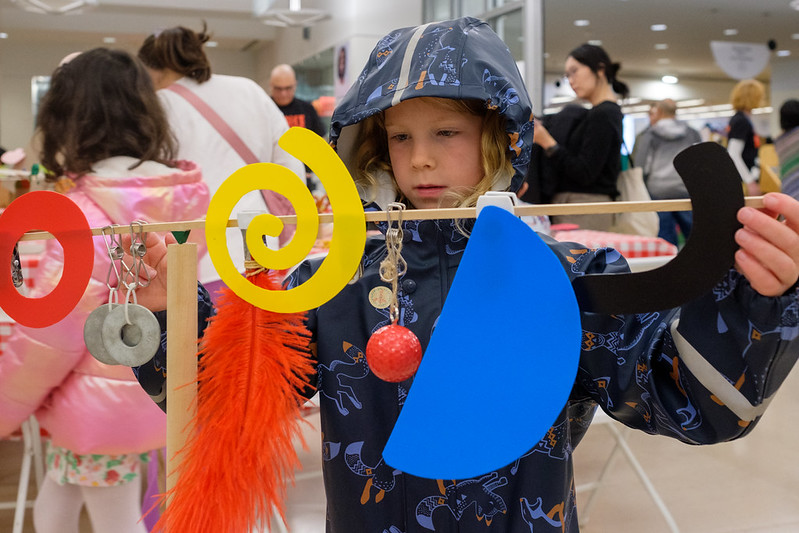
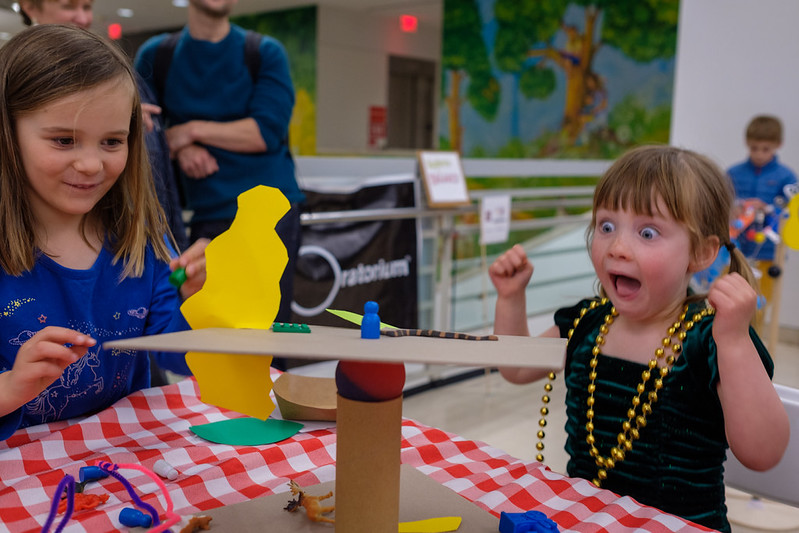
One of the great things about these balancing experiences is that they allow for many different forms of engagement. For some participants, wandering through and nudging an existing balancing sculpture to see it spin or fall was exciting enough. For others, they wanted hours to play, iterate, and explore.
We saw one instance of this when a brother and sister pair decided to build a “maximalist” balancing sculpture. My colleague Luigi was hanging out with them for a while and clocked that this duo had set themselves the goal of creating a big balancing sculpture using as many materials as possible. Amongst the intricate building, there were fascinating moments of self-reflection. Sometimes the sculpture they were building got so big that parts started to touch the ground. When this happened, one of the learners questioned “is this cheating?”. It’s their activity and their own goal so only they could answer that question, but as a facilitator, it was meaningful to hear learners reflecting and considering their creations. This highlighted that this wasn’t just a free play activity, these two learners were exploring with intention, communicating their thoughts and questions, and working together to create a collaborative art piece that they both had invested time, energy, and ideas in.
Across all the Afternoon of Ideas events, there were moments of intergenerational learning and we witnessed many throughout our balancing activities. One of these moments occurred between a caregiver and a child at Unstable Table. When they first started to explore the experience, the child didn’t seem that interested but the caregiver prompted them to each try putting one object on the platform to see if they could build together while keeping things from toppling over. Seeing them begin to explore I wandered off, and given the kid’s initial cool response to the activity, I wasn’t sure if they wanted to hang around. But when I circled back a few minutes later, both the caregiver and the child were deeply engaged and their unstable table was getting very crowded. I watched them continue to build, one piece at a time, each one taking turns. It seemed like they were trying to mirror each other’s placement of objects in an attempt to keep things balanced. I don’t know if that was a spoken goal or if it emerged through playing with the experience, but it seemed like some notion of symmetry and balance was starting to form. A very noticeable shift also had occurred in the younger learner. Where they were initially hesitant, now they were highly engaged, clearly expressing nervousness before every new piece was placed, and excitement when things didn’t fall over. However, with balance it’s always inevitable that things will come crashing down and when it did there were only exclamations of joy and excitement.
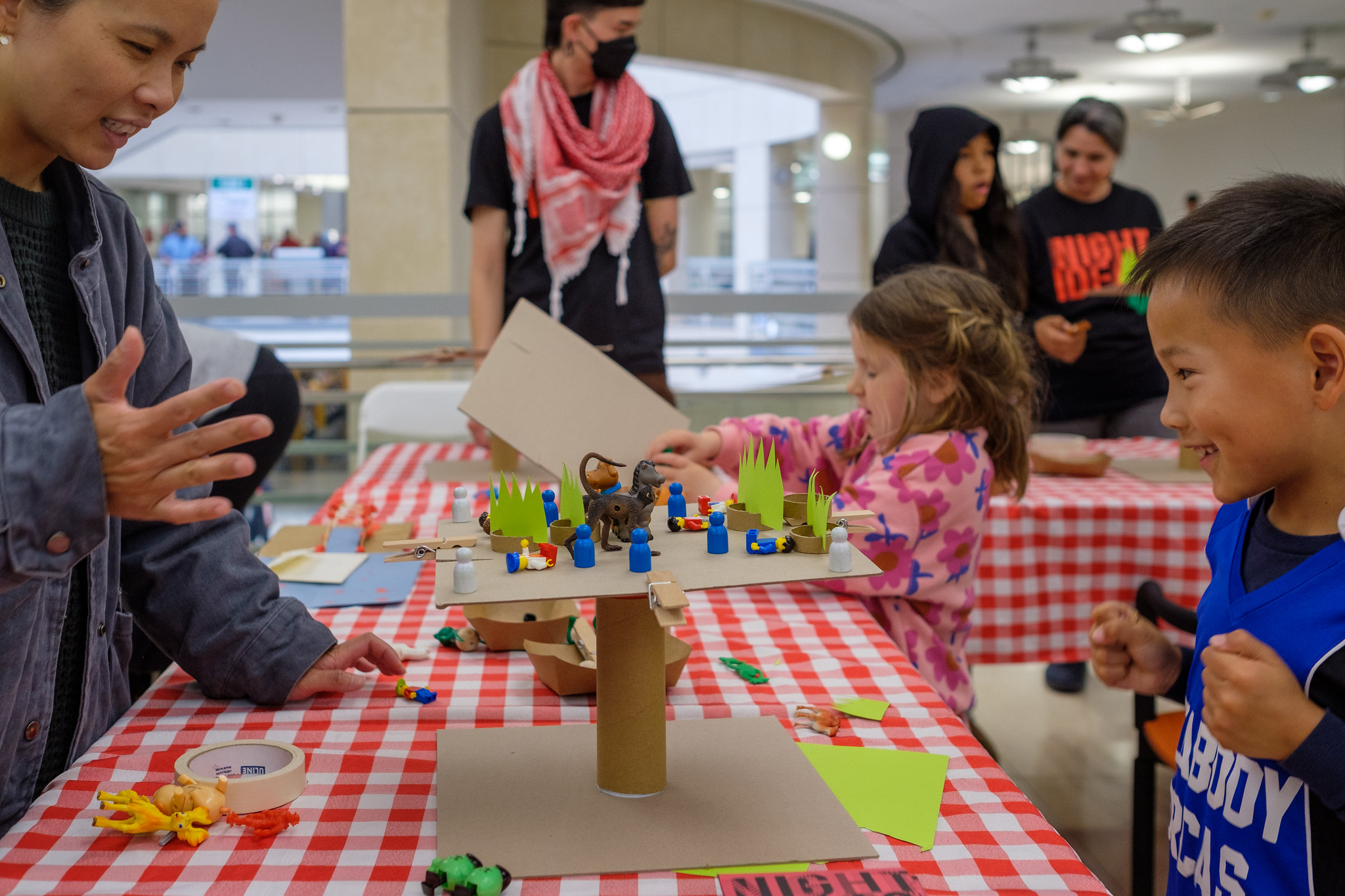
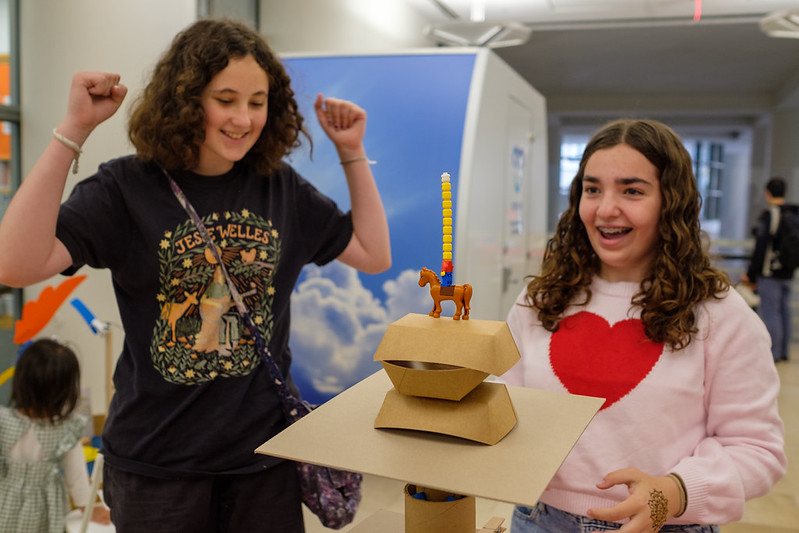
We also saw a pair of friends decide that they wanted to really push what it meant to build an unstable table by stacking multiple platforms on top of each other - essentially creating an unstable table tower! Setting this goal meant that they engaged in a lot of experimenting and testing. They explored different balancing points, a whole heap of different balancing objects, they took the material containers that we’d put out and repurposed them as weights and platforms, and they actively changed their roles during the exploration. Sometimes they were both placing objects, sometimes one of them acted as a stabilizing supporter while the other added a precarious piece. They both persisted when things fell apart and celebrated when they achieved their goal.
These were just a few of the many moments of learning that we saw throughout our afternoon at SFPL. Facilitating these experiences also sparked some new ideas that we are excited to explore so stay tuned for some new balance explorations.
Working with our partners at the Library has opened up so many more opportunities for us to bring playful learning experiences to Bay Area communities and we’re excited to continue working together!
The LEGO Group’s Playful Learning Museum Network is funded by the LEGO Foundation and hosted by the Association of Science and Technology Centers (ASTC).