
Last month, Mike and I had an opportunity to facilitate one of our favorite activities, Shadow Remix, at a LEGO Playful Learning Museum Network* convening.
*LEGO Playful Learning Museum Network: The LEGO Group's Playful Learning Museum Network is a community of U.S children's and science museums that come together to prioritize learning through play. Funded by the LEGO Foundation and hosted by the Association of Science and Technology Centers (ASTC), the network is pioneering high-quality, playful learning experiences for children within museum walls and out in the communities they serve.
Shadow Remix is an open-ended activity where participants use everyday objects to cast shadows, look closely at what those shadows might look like, and then add drawings on or around them to bring their interpretations to life. It’s a playful invitation to observe, imagine, and make meaning through light and shadow.
This was actually only the second time we’ve done the activity in person with a large group—most of our prior experiences with it took place online during the pandemic. This blog post is both a recap of the Shadow Remix activity we facilitated and a resource for anyone who might want to try it out in their own setting. We hope it offers inspiration and practical ideas for adapting the activity to your own context.
Setup
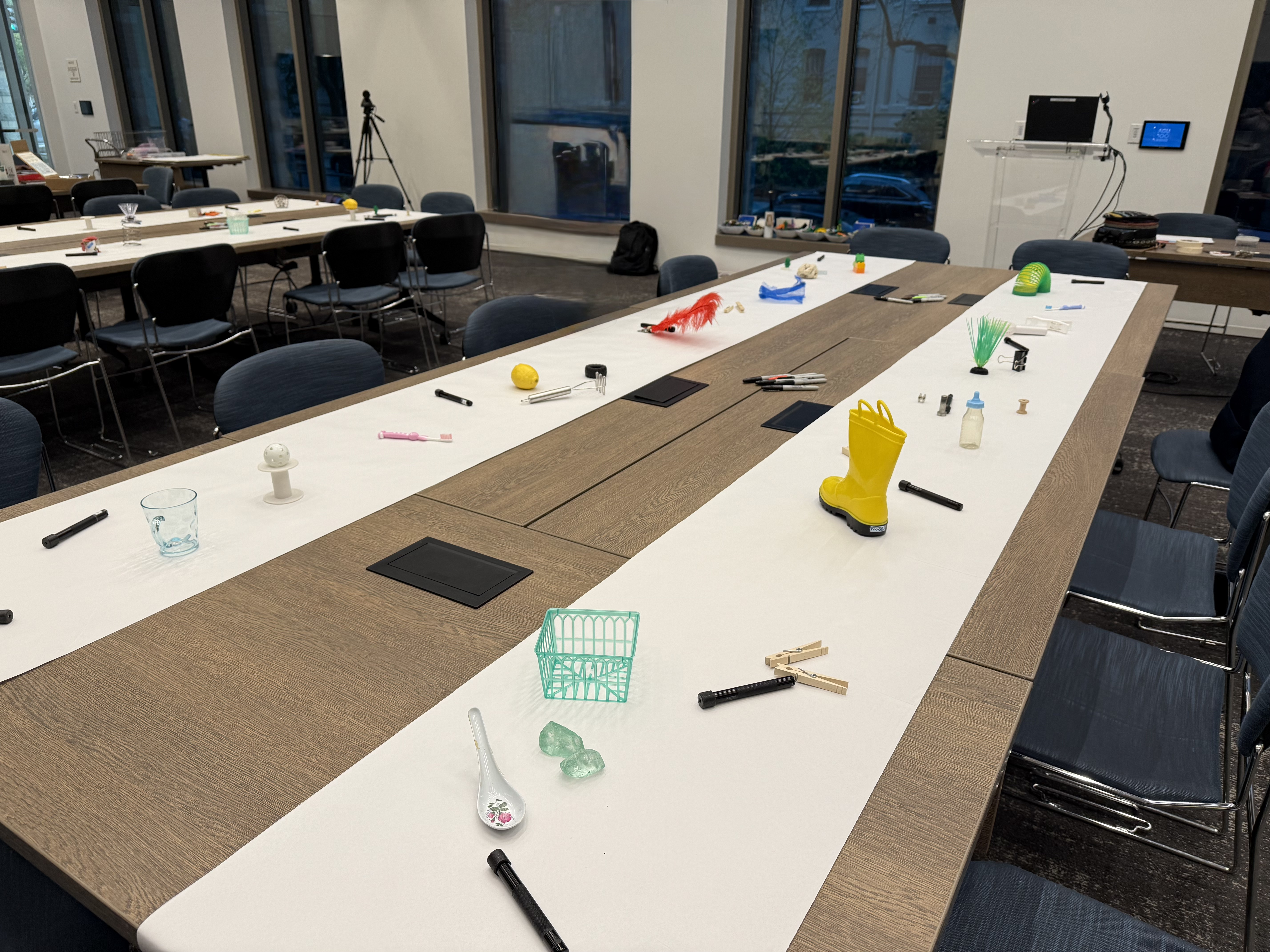
We connected conference tables and rolled out a long strip of butcher paper across them. On top, we placed a variety of eclectic everyday objects—everything from stones and rain boots to screws, slinkies, and kitchen tools. For lighting, while participants could use their phone flashlights, we also provided slightly modified MagLites to enhance the shadow-making experience.
Introduction
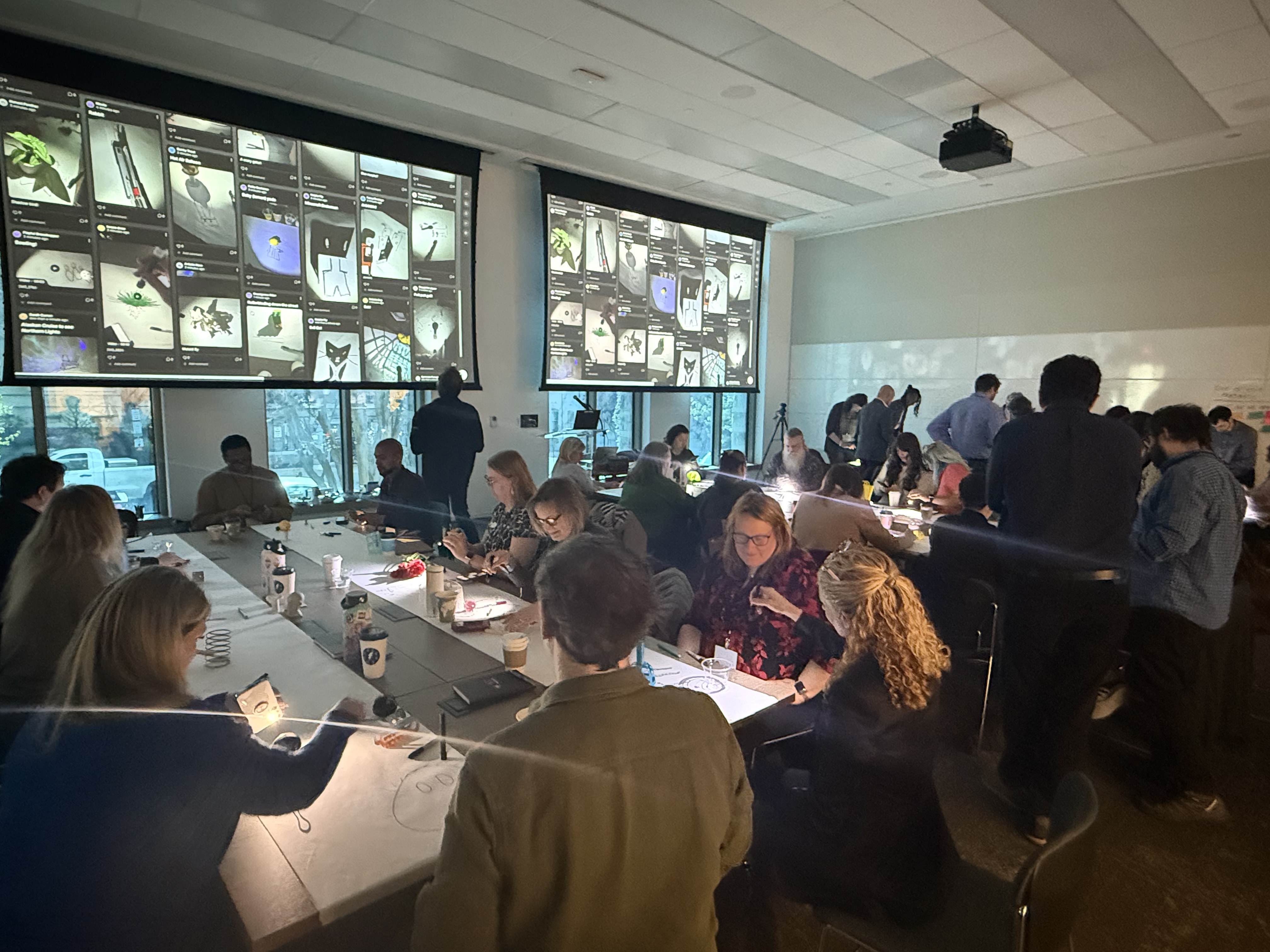
With a smaller group, it’s often best to demonstrate the activity live at the table—but with nearly 50 participants this time, we showed a short video demo of the process on a large screen instead.
The video acted as a quiet, visual guide that we could talk through as it played—adding live narration in response to the audience's reactions. It felt almost like doing a live demo, and in some ways, it actually went more smoothly!
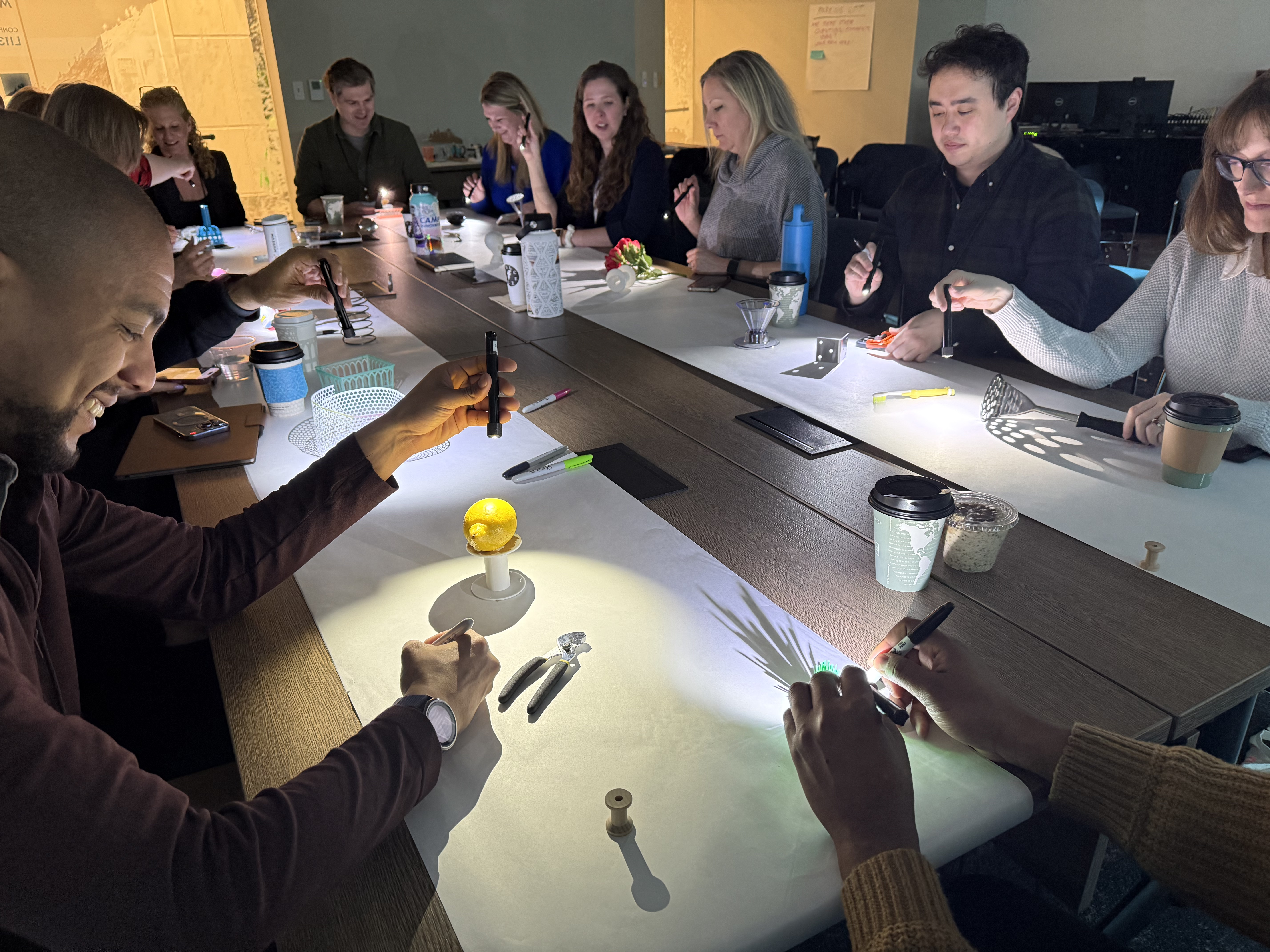
Then it was time to play!
Prompts
We offered a few simple prompts to help participants get started:
- Start by exploring how shadows change when you shine a light on an everyday object.
- Try moving the light around — at some point, the shadow might start to look like something unexpected or familiar. When that happens, pause and add some drawing on or around the shadow to show what you see in it.
- Take a photo of your shadow remix.
- Upload it to Padlet using the QR code.
Padlet
With nearly 50 participants in the room, it is hard to get a sense of what everyone was working on. Tinkering is inherently social, and we’re always looking for ways to make individual processes more visible to the group. That’s why we used Padlet —it allows participants to easily upload photos and text without needing an account, creating a shared board. We encourage people to post their works-in-progress photos —not just polished ones—and to build on each other’s ideas as they go. We projected the Padlet onto large screens so everyone could see the evolving collection of ideas in real time.
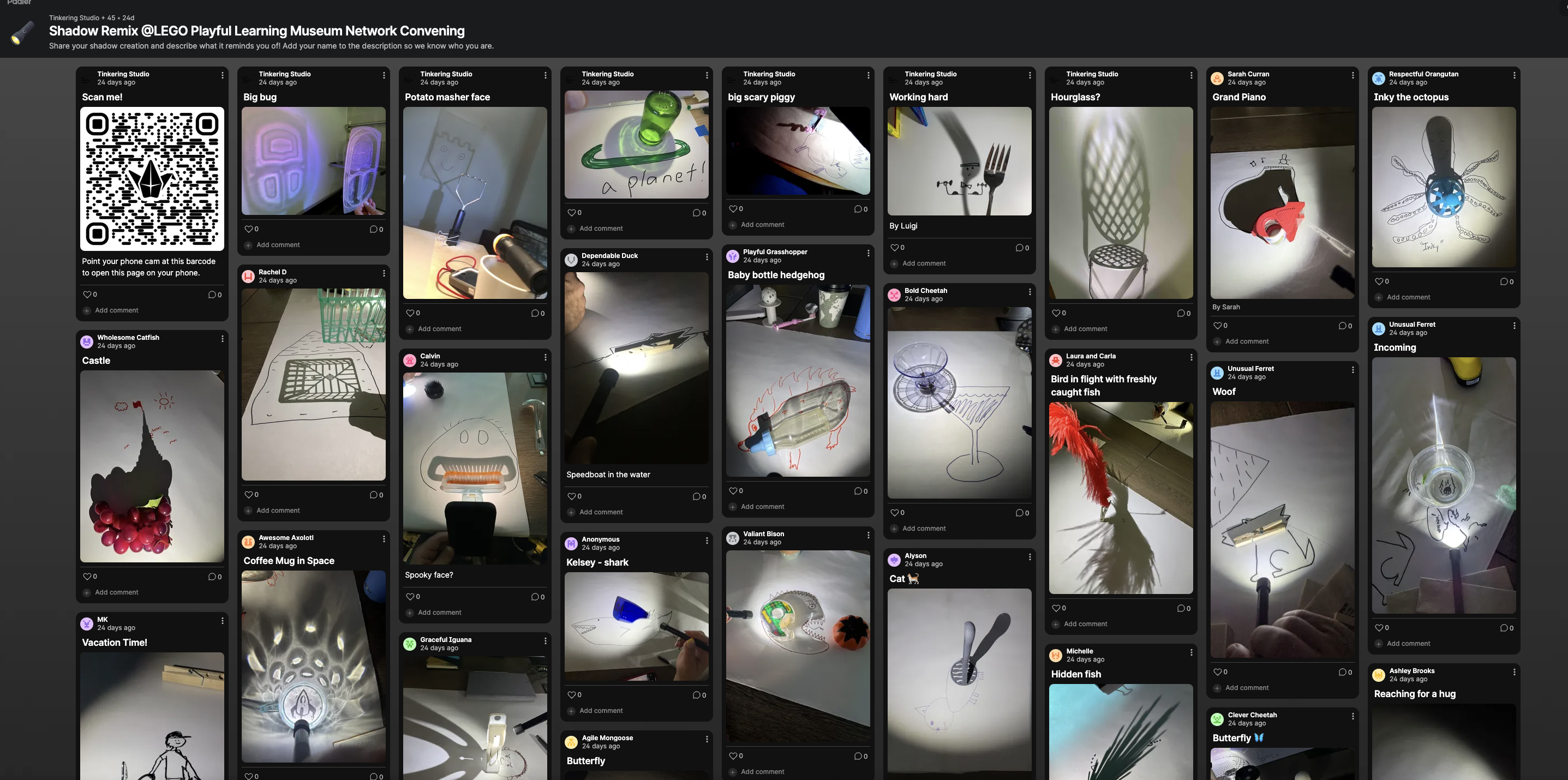
You can explore the actual Padlet board [here], but I wanted to share a few of my favorites: a metal spring that turned into butterfly wings (made possible by shining two flashlights from opposite sides!), a clothespin transformed into a cat—and then into a human body! A roll of packing tape became a grand piano, and plastic grapes turned into a castle... Notice how the same clothespin turned into several different things!
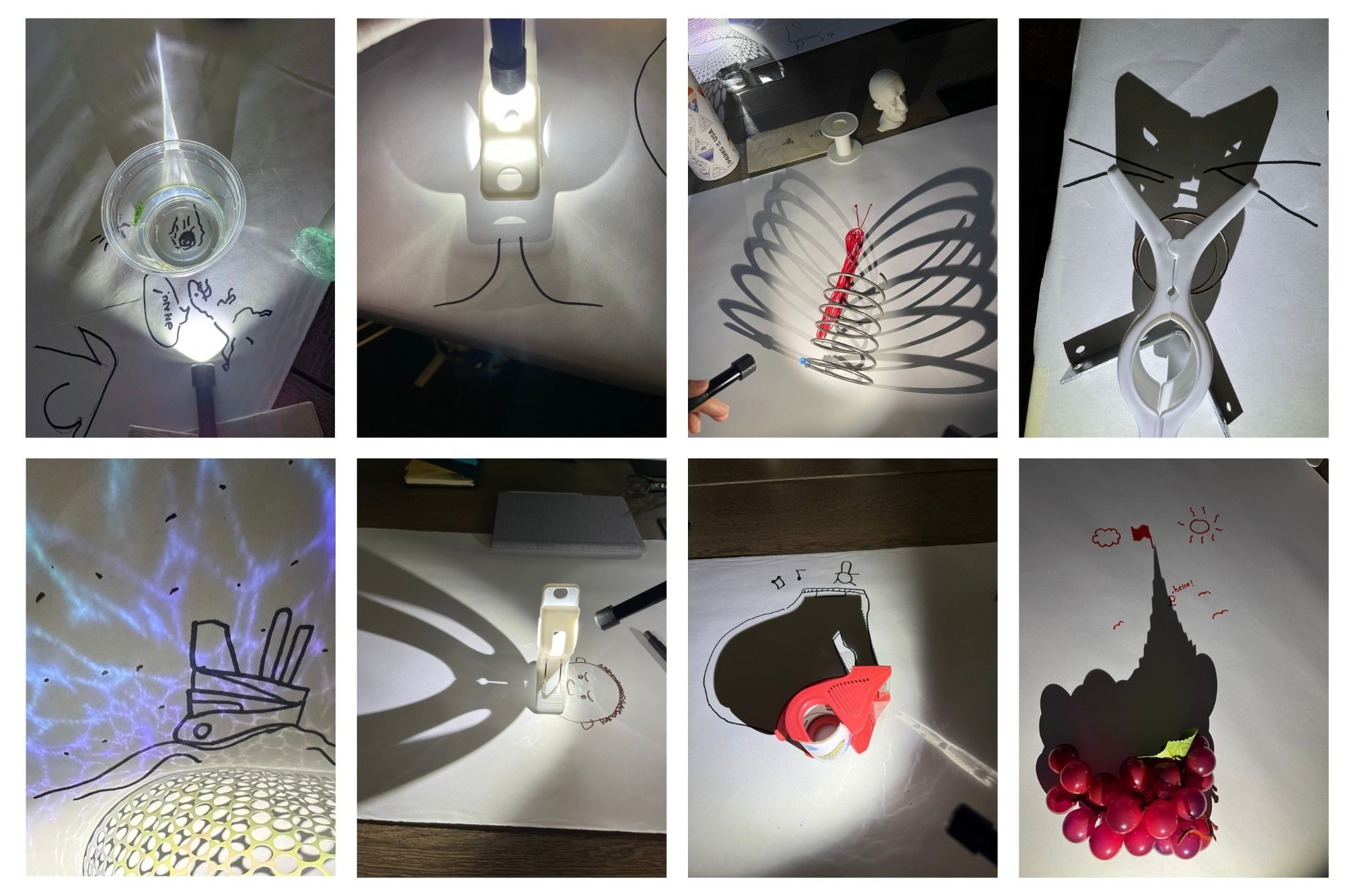
One shadow can be seen in so many different ways—and remixed again and again. That’s what I love most about the Shadow Remix activity. When I was selecting the objects before the activity, I never imagined they would lead to such playful possibilities. I’m constantly amazed by the unique perspectives people bring to the table.
Reflection
At the end of the session, several participants shared reflections on their experience. Many said that just walking into the room and seeing the setup immediately sparked their curiosity. What began as a solo exploration often turned into a collaborative activity, as people naturally started asking for an extra hand or exchanging ideas with those around them. Once you try it, you quickly realize that the process often calls for multiple hands—holding the light, taking photos, and adding drawings all at once!
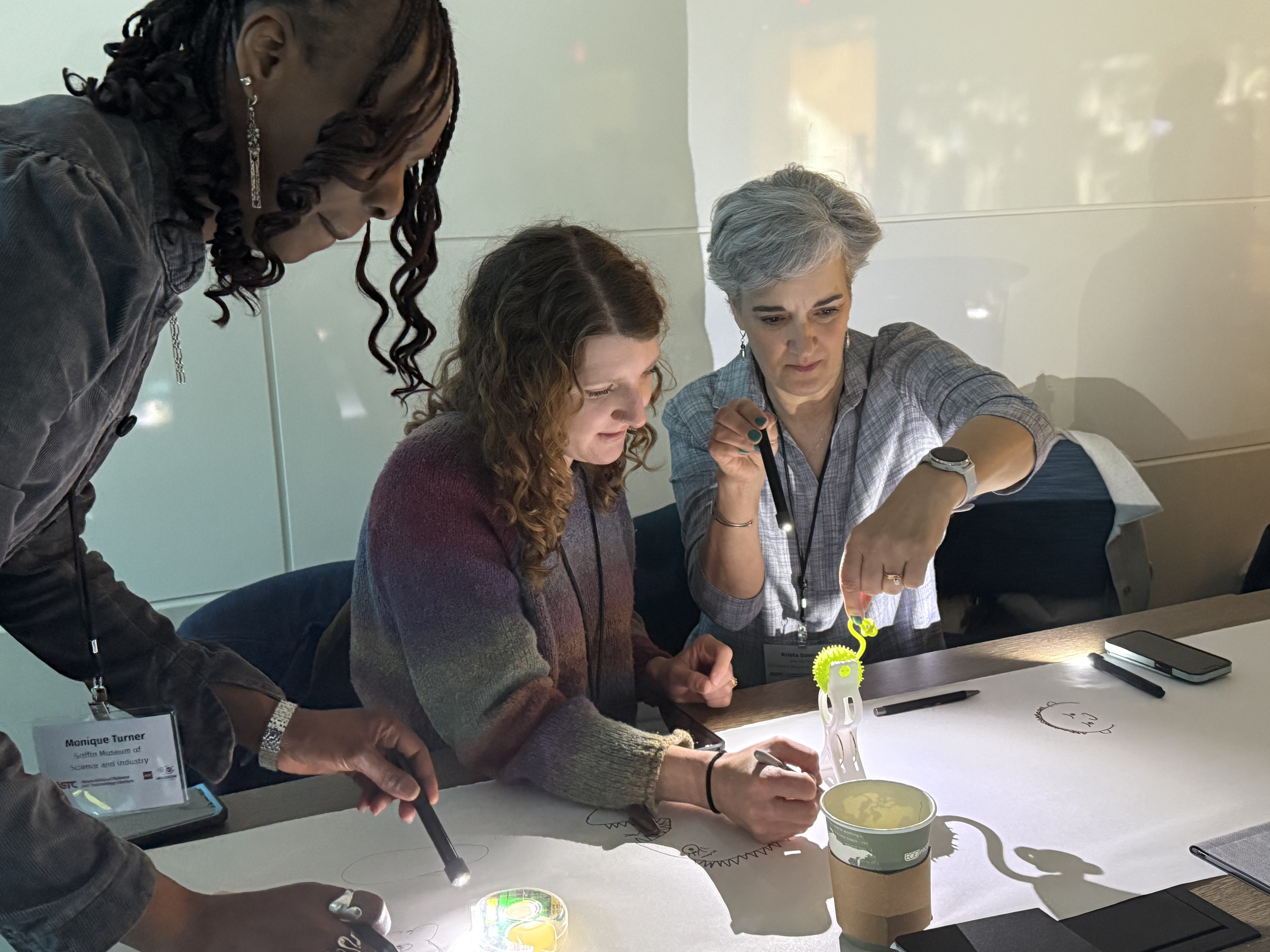
They appreciated that there was no single "right answer," and the open-ended nature of the activity made space for experimentation and personal expression. A several participants even mentioned wanting to try it out with their own team as part of a future staff training session.
Try it at your own site!
If you’re interested in trying out this activity at your own site or with your team, one of the keys is having a wide variety of intriguing objects to explore. Curious what that might include? We’ve documented most of the objects we used in this workshop below.
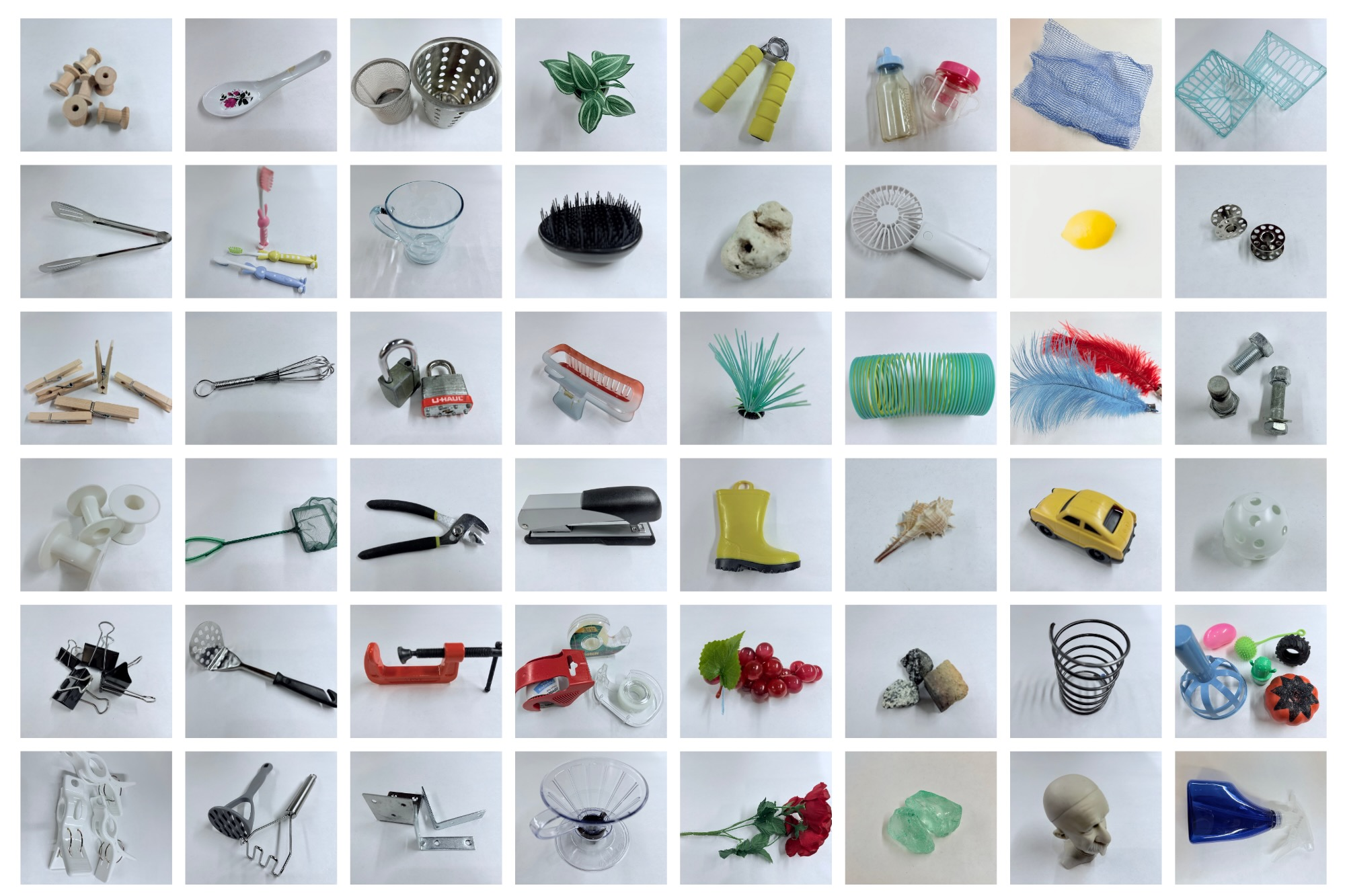
A good tip is to choose familiar everyday objects that have interesting or unusual shapes—and to include a wide range of types. Think kitchen tools, rocks, office supplies, toys, plants, and more. Objects like clothespins are great to have in multiples, so several people can explore the same item at once and come up with completely different interpretations. It’s always fun to see how varied the results can be!
Textures add another layer of interest—grids and mesh, reflective surfaces, translucent colored plastics, and even mirror-like materials can all spark creative possibilities. One participant even added water to a cup and used the reflections water as part of their shadow remix!

And don’t forget to cover the tables with butcher paper! Rather than handing out individual sheets or covering the entire table, we laid long strips of butcher paper down the center—almost like table runners or oversized placemats. This approach created a shared, collaborative workspace while keeping the table open and inviting.

As for the light source, the bottom line is that most phone flashlights work well—they’re single-point LEDs, which are great for casting crisp shadows. That said, people often use their phones to take photos as well (which is why doing the activity in pairs or small groups works nicely), so we also provided some flashlights just in case. We used MagLite Minis that were slightly modified with 3D-printed parts— we’ll share more about in a separate blog post. But even without the modified parts, simply removing the head of the MagLite flashlight works pretty well!

One way to introduce this activity is through picture books like Duck! Rabbit!, which plays with the same core idea. The book isn’t about light and shadow per se—it’s about perspective. We love using it as an inspiration for Shadow Remix because it invites participants to use their imagination, consider multiple interpretations of the same image, and express what they see by adding drawings.
As part of the LEGO Playful Learning Museum Network, we value open sharing of ideas and rapid iteration across the network. This convening gave us a great chance to prototype Shadow Remix in person, and even as facilitators, we walked away with new ideas and adjustments we’d like to try next time.
We hope this inspires you to make it your own—and that the ideas will keep remixing and evolving from here!

The LEGO Group's Playful Learning Museum Network is funded by the LEGO Foundation and hosted by the Association of Science and Technology Centers (ASTC).