
In the previous post, I shared how Light Play Studio brings together a set of exhibits exploring light, shadow, and color. Here I'd like to focus more closely on Shadow Creatures and reflect on a few moments from its development that have stayed with me.
At one point, we had a working prototype that felt rich with possibility—a single-point light, everyday objects, shadows, and magnetic shapes were all there. We knew the activity could work with facilitation; we had run versions of it many times in workshops and activity settings. But in trying to translate it into a standalone exhibit, we kept coming back to one question:
How do you get people started… without telling them what to do?
After several floor tests, we began noticing a pattern: visitors often approached the exhibit and hesitated. They didn’t quite know what was being invited.
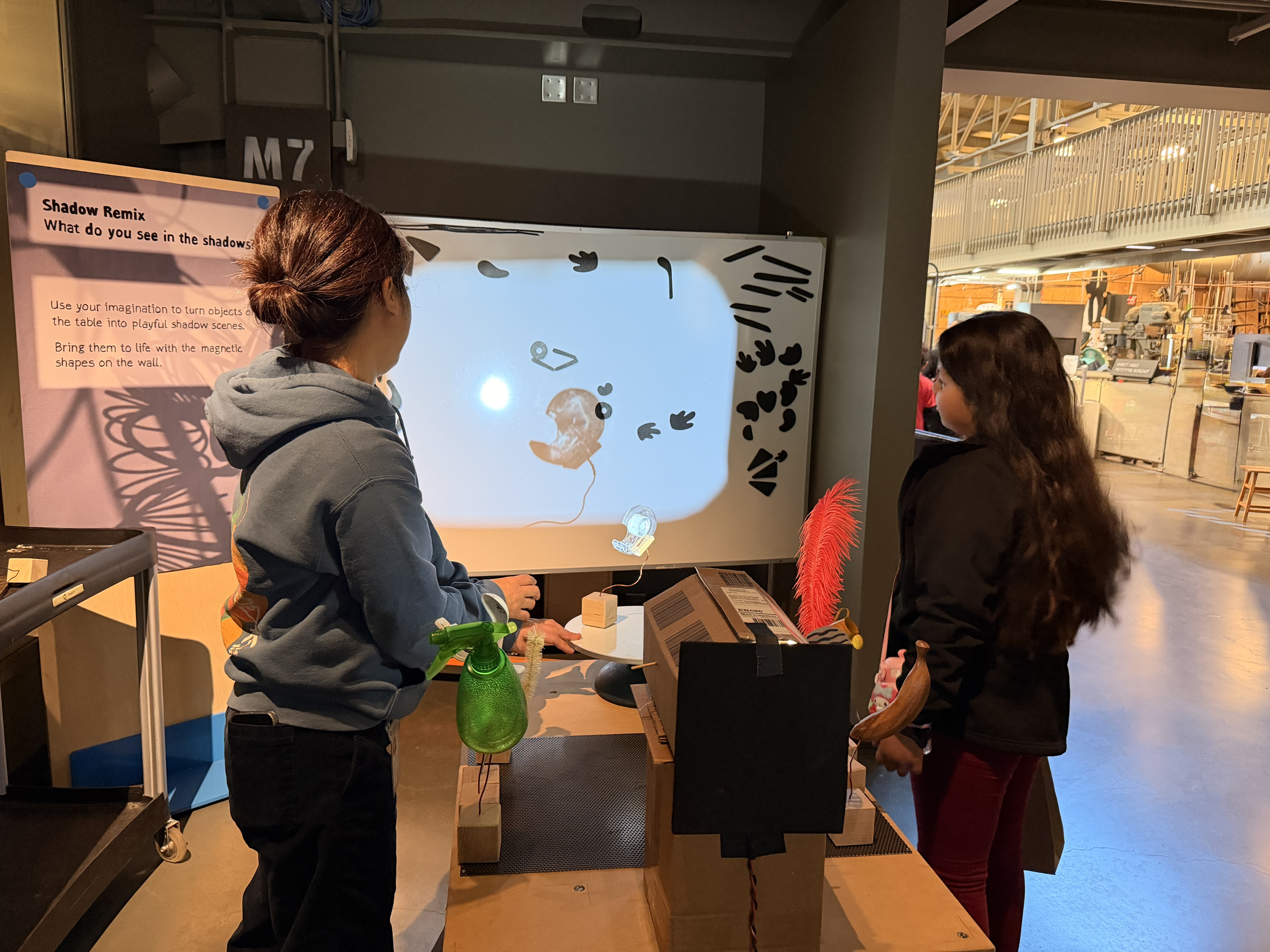
We tried adding a prompt on a nearby sign, but most people didn’t read it. We often found ourselves stepping in to explain the activity—exactly what we were hoping a standalone exhibit wouldn’t require.
The breakthrough came through something surprisingly simple: graphics and naming.

Originally, the exhibit was called Shadow Remix—the name we had long used within the Tinkering Studio—accompanied by abstract graphics designed by Ray. The title had a poetic quality, but it didn’t help people understand what kind of experience was being offered.
Later, Ray redesigned the graphics around a new title—Shadow Creatures—and incorporated a photograph by Ida of a lion-like shadow creature I had created using a condiment bottle, a sink brush, and a tube brush. Along with invitation text shaped with Phillip and the team, that shift changed the invitation dramatically.
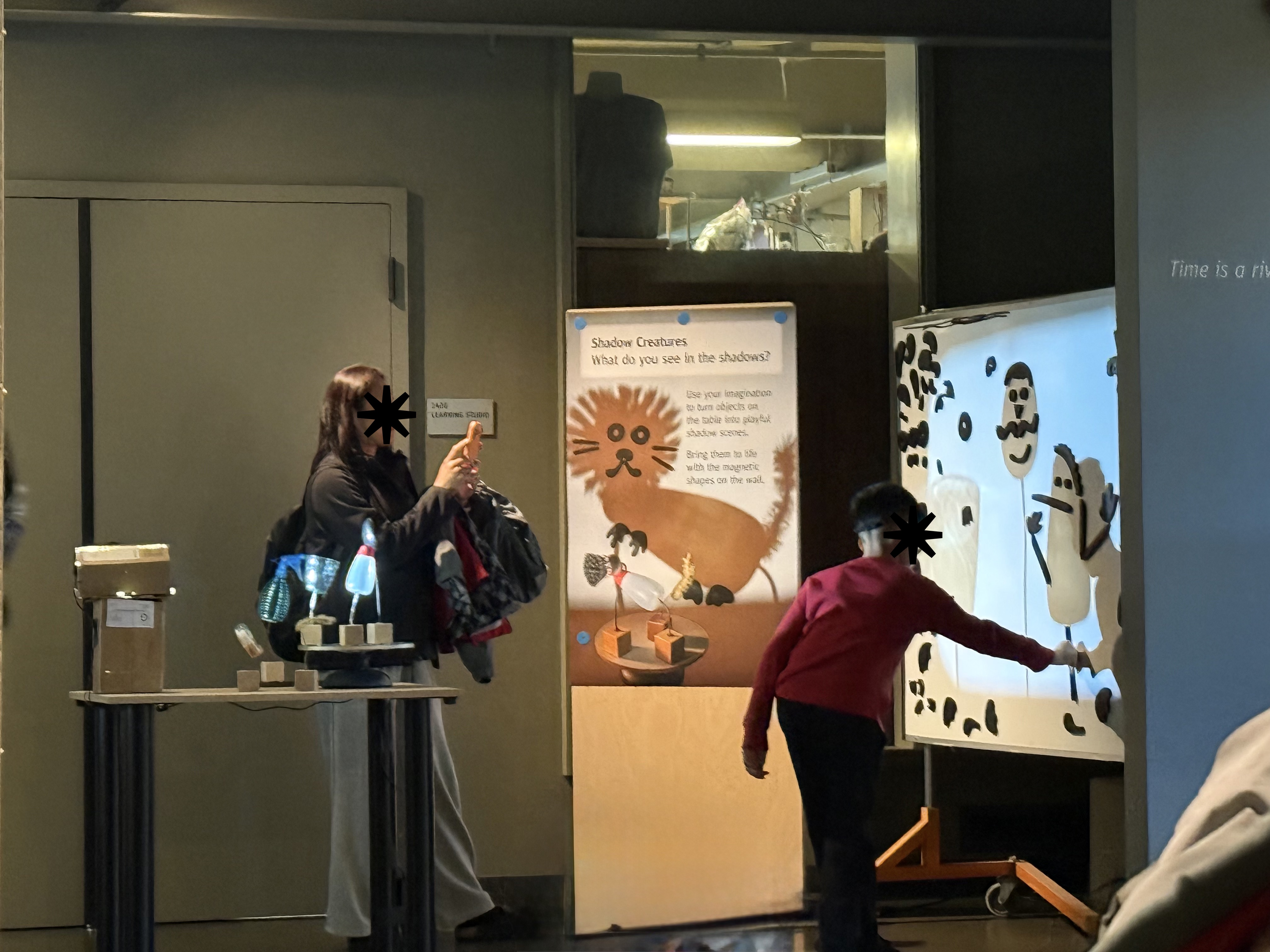
People immediately “got it.”
They began experimenting without being told what to do.
The wording mattered, too. The prompt wasn’t written as step-by-step instructions. It didn’t tell visitors exactly what to make or how to make it. Instead, it asked a question and opened a possibility:
What do you see in the shadow?
The signage wasn’t instruction. It was an invitation.
For us, this was a reminder that facilitation doesn’t disappear in unfacilitated exhibits—it can move into the design itself. It can live in the environment people encounter at first glance, in a title that immediately makes sense, in everyday materials that suggest familiality and possibilities, and in many small design choices that help people get started without being told what to do.
In that sense, facilitation can be embedded in the exhibit itself.