Studying Marine Food Webs with Puke and Poop
Studying Marine Food Webs with Puke and Poop
With Point Blue Conservation Science
The diets of marine predators can tell us a lot about the ocean’s health, fisheries ecology, and climate change. At the Point Blue Marine Laboratory, the contents of regurgitated pellets of Brandt’s cormorants (a common coastal seabird species) and scat of California sea lions are examined to understand what they are eating and how their diets have changed over time. Learn about what they look for in samples such as fish otoliths (tiny ear bones), fish scales, cephalopod beaks, and more!
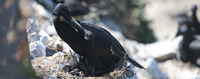
Photo of a Brandt's cormorant parent on a nest with chicks is courtesy of Fanny Sanchez Villarreal.