
Since my last post about weaving way back in December, we've been continuing to try different approaches to tinkering with textiles. It's been an interesting journey, with lots of discoveries (and challenges!) along the way. Here's an overview of some of the big ideas we've experimented with.
Incorporating Technology
My initial excitement for exploring weaving as a topic came from its connections to computational thinking. With that starting point in mind, I did some research into computational connections and stumbled across a post on Medium that linked to a Processing file for a "digital loom." With this code, you can play with changing variables to adjust color and pattern. My knowledge of Processing is pretty limited, so most of my exploration was around linking changes to variables to noticeable outcomes that affect the pattern. I definitely made some mistakes along the way, but eventually got the hang of knowing which variable to change to get the outcome I was looking for.


These examples show some glitches in my first attempts at playing with the variables.

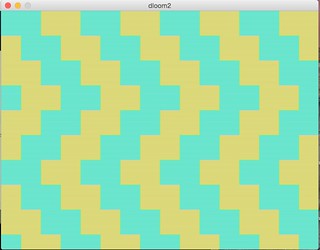
These show some before and after examples of more successful tests in playing with the code for more purposeful outcomes.
While the digital loom was a fun foray into incorporating technology, the question remained, how could we turn these patterns into physical woven objects? For help on that, I turned to our longtime collaborator Stacy Speyer. In addition to designing playful ways to explore polyhedra, Stacy is also a talented weaver and knows tons about ways to make connections between math and the physical world. She introduced us to a software platform iWeaveit that allows you to create digital designs that can be easily translated on a loom. We spent a few afternoons tinkering with designs on the software then using her table loom to translate them to a woven piece of cloth. Which brings me to our next phase of prototyping...


Playing with Real Tools

Making the Materials Accessible


As a next step, we'll be trying this process on the floor with visitors sometime this summer after Maker Faire. I still have lots of questions about this activity. How can we make it more tinkerable? Are there ways to make the connections between weaving and computation clearer without making it feel like a force fit? What's the line between exploring a process and following step-by-step instructions for this activity? How can we relate this practice to the cultural traditions of weaving found all over the world? Even though we don't have these questions answered yet, I think this puts us in a good place for future exploration with visitors to the Tinkering Studio because we'll have so much to learn!

This work was supported by a grant from Science Sandbox, an initiative of the Simons Foundation

This project was made possible through the generous support from the LEGO Foundation